
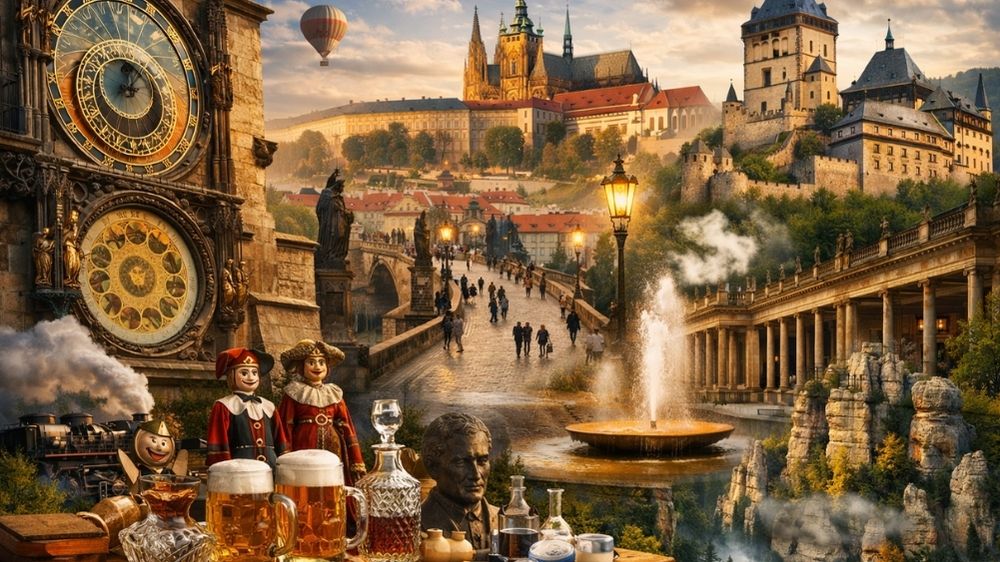


Czech Republic Travel Guide
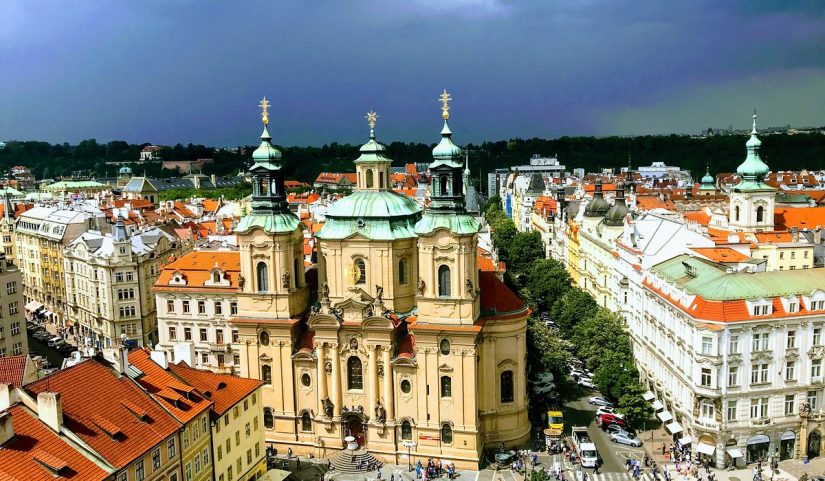
Living in Marmaris, one inevitably seeks the sea, fresh air, and long evenings when traveling. Previously... IzmirHaving experienced the relaxed atmosphere of Prague, the tranquility of Yozgat, and the orderly city life of Ankara, what first surprised me in the Czech Republic was how they managed to cram so much urban character into such short distances, in a way that was completely different from all those experiences. In Prague, you can walk along the Vltava River in the morning, take a train to Brno in the afternoon, and the next day find yourself in the medieval center of Český Krumlov, just a few streets away.
I don't think of the Czech Republic as just a country for "going to Prague and seeing the Charles Bridge." Prague The first trip deserves mention, but Brno's student energy, Karlovy Vary's thermal city atmosphere, the wine towns of South Moravia, and Český Krumlov after the night tourist buses have left, all contribute to the true diversity of the journey.
General Information About the Czech Republic
| Information | Detail |
|---|---|
| capital | Prague |
| Official language | Çekçe |
| Currency | Czech Koruna, CZK |
| Kur | At the beginning of September 2026, 1 EUR will be approximately 24,2 CZK. Mentally, I'm calculating that 100 CZK is approximately 4,1 EUR. |
| ACADEMIC AUTHORITIES | Parliamentary republic |
| Population | Approximately 10,9 million |
| Area | 78.871 km². |
| Your | There is no state religion. The population with no religious affiliation is quite high, with Catholicism being one of the main traditional beliefs. |
| Hours | In summer Turkey1 hour behind in winter, 2 hours behind in winter. |
| General emergency number | 112 |
| -Polis | 158 |
| Ambulance | 155 |
| Fire Department | 150 |
If you're going to Prague for the first time, I'd especially advise you on money matters: bringing Euros is useful, but don't try to do your daily shopping in Euros. The Czech Republic isn't in the Eurozone. Using Czech Koruna (Czech Republic) for restaurant, grocery, and public transport bills is much more efficient.
When to Go to Czechia?
My favorite times to visit the Czech Republic are May-June and early September-October. You can also visit Prague in July and August, but Charles Bridge, Old Town Square, and... Prague Castle The density of tour groups around changes the rhythm of the trip. Crossing the Charles Bridge around 7:00 in the morning and crossing it in the afternoon are almost like crossing two different cities.
There's another reason to go in winter. In 2026, the Náměstí Míru Christmas market opens on November 20th, and the main markets in the Old Town and Wenceslas Square open on November 28th; these markets run until January 6th, 2027. When planning my winter trip to Prague, I take into account that daylight ends early, completing my outdoor activities before noon and leaving museums and cafes for the afternoon.
How to Get to Czechia?
The easiest entry point from Türkiye is Prague. IstanbulThere are direct flight options from both Istanbul Airport and Sabiha Gökçen Airport, and the flight takes approximately 2 hours and 40 minutes.
Ticket prices are extremely sensitive to dates. In September 2026, with a slight delay in flights from Sabiha Gökçen Airport to Prague, a one-way ticket with AJet could go down to around 3.300-4.100 TL; however, if I want to travel within a few days, the same ticket would cost 6.600-7.600 TL. For Turkish Airlines flights departing from Istanbul Airport, round-trip economy tickets start at around 9.100 TL during the month, but seeing prices in the 14.000-20.000 TL range in the near future is not surprising.
I don't need a taxi when going from Václav Havel Prague Airport to the city center. I take trolleybus number 59 from in front of the terminal and reach Nádraží Veleslavín in about 15 minutes, then transfer to metro line A. A 90-minute pass (2026 timetable) costs 46 CZK on the PID Lítačka app or 50 CZK with a physical ticket. This single ticket covers both bus and metro transfers.
Visa and Entry Requirements in the Czech Republic
Turkish citizens traveling with a burgundy passport need to obtain a Schengen visa for the Czech Republic. Holders of private, or green, passports are exempt from visa requirements for short-term and non-profit trips to the Czech Republic. Ankara The embassy also clearly states this distinction for Turkish citizens.
For short-term tourist visa applications, the Schengen rule applies, meaning a maximum stay of 90 days within a 180-day period. The Schengen visa fee is 90 EUR for adults and 45 EUR for children aged 6-12.
When preparing a visa application, I don't just check if there are "6 months left" on the passport's expiration date. According to Schengen rules, the passport must be valid for at least 3 months after the planned Schengen departure date, have been issued within the last 10 years, and have at least two blank pages for the visa application.
For someone living in Marmaris, the important detail is this: MuğlaThe Czech Republic's Consulate General in Istanbul has jurisdiction over this area. Short-term applications in Istanbul, Izmir, and surrounding areas can be processed through VFS Global; Mugla is also within the jurisdiction of the Istanbul Consulate General. Those residing in Ankara can apply to either Ankara or another province depending on their place of residence. Antalya They apply through visa centers.
Visas are not issued at the border. I keep my return ticket, accommodation information, and travel plan readily accessible. Since obtaining a Schengen visa does not automatically grant entry, border officials may request supporting documents regarding the purpose of travel and financial means.
Cities and Regions to Visit in the Czech Republic
- Prague: I allocate at least 3 full days for my first trip. Starting from Prague Castle on the Hradčany side and walking towards Malá Strana, Charles Bridge, Staré Město, and Wenceslas Square allows you to understand the city's backbone in a single day. The Prague Castle main tour route costs 450 CZK for adults. National Museum The complex costs 360 CZK.
- Český Krumlov: It's a good day trip, but I recommend staying overnight. After 18.00 PM, when the day tours stop, the historic center inside the bend of the Vltava River becomes something else entirely. A direct bus from Prague takes about 2 hours and 35-40 minutes.
- Brno: If I want to see another major Czech city after Prague, my choice is Brno. The area around Špilberk, Zelný trh, and the historical center are all interconnected on foot. Direct trains from Prague to Brno take about 2 hours and 35 minutes, and tickets purchased in advance can cost around 100-200 CZK.
- Karlovy Vary: Prague is unique not only for its colorful buildings but also for its culture of walking from fountain to fountain with a thermal water glass in hand. The bus journey from Florenc to Prague takes approximately 2 hours and 15 minutes. It's possible to catch a bus starting at around 200 CZK in September 2026.
- Kutná Hora: This is one of my favorite day trip destinations from Prague. People go there for the Sedlec Ossuary, but instead of just seeing the chapel, I prefer to add St. Barbara Cathedral and the old town streets. It's about an hour by train.
- Olomouc: It's not as tourist-focused as Prague or Český Krumlov. Walking around the astronomical clock and the Holy Trinity Column in Upper Square, you get a more casual Czech city. It's a nice stopover on routes leading towards Moravia.
- South Moravia and Mikulov: When I get tired of sightseeing in the city, I head here. Mikulov, the Lednice-Valtice area and the vineyard routes are especially popular during the September harvest.
The walking path I used for my first day in Prague was roughly as follows:
What to Do in Czechia?
- Go to Prague Castle in the morning: I prefer the hours closer to opening time. The main route is 450 CZK and includes St. Vitus Cathedral, the Old Royal Palace, St. George's Basilica, and Golden Lane.
- Cross the Charles Bridge twice: Do one during the day, and the other early in the morning or at night. Entry is free. The bridge isn't the same experience as the midday crowds compared to the early morning.
- Choose a rainy day to visit the National Museum: The main complex at the upper end of Wenceslas Square costs 360 CZK for adults. If you're traveling with children, knowing that children under 15 can enter the main museum complex for free makes a difference to your budget.
- Take a walk in Náplavka on Saturday morning: The market area on the Vltava riverbank makes me feel closer to everyday Prague than to the touristy Old Town. The Náplavka farmers' market continues on Saturdays during the 2026 season.
- Stay one night in Český Krumlov: I really notice the difference before 8:00 AM and after the evening buses have left. Dragging suitcases through the narrow streets is tiring, so it's more comfortable to enter the historical center with a small bag instead of a large one.
- Taste the thermal waters in Karlovy Vary: The temperature varies between the fountains. Instead of quickly drinking the first glass, it's more sensible to try a few fountains with small sips.
- Try Moravian wine in its place of origin: If I'm going to Mikulov or the surrounding wine villages for a wine tasting, I don't drive. I use Brno as a base and prefer a combination of train and local transport.
What to Eat in Czechia?
Czech cuisine isn't a light cuisine. It's heavy on meat, sauces, potatoes, and knedlík (a type of Turkish pastry). For someone accustomed to the long winter meals in Yozgat, it has a satisfying quality that won't seem unfamiliar, but when I eat the same type of main course three days in a row, I add lighter meals in between.
One of the first places I look for classic Czech food in Prague is Lokál Dlouhááá. Here, in autumn 2026, daily main courses cost around 225-240 CZK, butter-fried schnitzel is 355 CZK, and a 0,5-liter bottle of Pilsner is 74 CZK. So, if I sit in the tourist center and have a single main course and a beer, I set aside approximately 300-450 CZK.
If I like meat, Kantina is my preferred choice. Here, the price varies depending on the weight of the meat. For example, flank steak is 152 CZK per 100 grams, dry-aged ribeye is 201 CZK per 100 grams, and 200 grams of aged beef tartare is around 405 CZK.
On days when I want to extend my breakfast a bit, I go to Café Savoy. Espresso is 88 CZK, cappuccino 108 CZK, and the classic větrník dessert is 175 CZK. A more comprehensive Savoy breakfast is around 455 CZK.
To see what lunch in Brno is like at local price levels, Stopkova Plzeňská Pivnice is a good reference. At the beginning of September 2026, soups were around 50 CZK daily, and main courses around 179-229 CZK. I realize here how much the food budget can be relaxed after leaving the most touristy part of Prague.
Among the dishes I tried, I particularly liked svíčková, vepřo knedlo zelo, goulash, smažený sýr, and the fruity ovocné knedlíky. While trdelník, which you see on the street, is very much associated with Prague, for me it's not a "staple dish of traditional Czech cuisine," but rather a touristy snack.
What to Buy from Czech Republic?
When shopping in the Czech Republic, I don't just pop into the first souvenir shop near the Old Town Square. If I'm buying Bohemian crystal, I check to make sure it's genuinely Czech-made. Czech garnet, small ceramics, wooden puppets, and local design items are more portable options. Spa mugs from Karlovy Vary and the thin wafers called oplatky are also classic souvenirs. In Prague, I find weekend markets for local design more enjoyable than shopping at mass-produced souvenir shops.
Transportation in the Czech Republic
Prague is one of the most convenient cities for me in Europe when it comes to public transport. In 2026, on the PID Lítačka app, a 30-minute ticket costs 36 CZK, a 90-minute ticket 46 CZK, a 24-hour ticket 140 CZK, and a 72-hour ticket 340 CZK. Paper tickets are a few CZK more expensive. For my busy three-day trip to Prague, I buy the 72-hour ticket and completely eliminate the "what extra would I pay if I took this tram" calculation.
When traveling between cities, I first look at trains. The direct connection between Prague and Brno takes about 2 hours and 35 minutes, and promotional fares booked in advance can drop to as low as 99 CZK; during normal travel times, budgeting for a few hundred CZK is more realistic.
I find the bus more convenient than the train for Český Krumlov. A direct bus from Prague takes about 2 hours 35-40 minutes and costs roughly 310-450 CZK in autumn 2026, which is reasonable. The bus to Karlovy Vary takes about 2 hours 15 minutes and cheap fares start from around 200 CZK.
Given the scale of the Czech Republic, I would hardly consider taking a domestic flight for a tourist trip. On a route like Prague-Brno, considering the travel time to the airport, security, and waiting time, the train makes more sense. In this country, my transportation plan is based on train + bus.
Accommodation in the Czech Republic
If it's my first time in Prague, staying in Praha 1 is convenient for walking but increases the budget. Instead of staying right in the heart of Staré Město, I find areas like Nové Město, Vinohrady, or Karlín more convenient in terms of price-location balance. During a busy period like September 2026, the minimum price for a private double room in Prague can drop to around 1.200 CZK; a budget of 2.500-4.500 CZK per night in a central and decent mid-range hotel is more realistic for me. Current searches show that hotels in Prague start from around 55 USD.
I'd consider around 700-1.200 CZK for a hostel bed, and 4.500 CZK and up for a comfortable boutique hotel. The advantage of staying in the historic center of Český Krumlov is being able to experience the nightlife; the disadvantage is carrying your suitcase through the cobblestone streets. In Brno, I usually find the same quality at a slightly more affordable price compared to Prague.
My main rule is this: during the Christmas market season in Prague, Easter I don't leave the accommodation for the last week, especially for the surrounding area and summer weekends.
Czech Republic Currency and Budget Planning
The Czech Koruna feels a bit large on the first day, but my simple calculation shows that 100 CZK is approximately 4,1 EUR. By the beginning of September 2026, 1 EUR will be around 24,2 CZK.
On an economic trip I'm planning on spending around 1.500-2.200 CZK per person per day, including hostel accommodation, mixed grocery/cafeteria meals, public transport, and mostly free walking routes.
In the mid-range budget Sharing a hotel room between two people, going to one good restaurant a day, a few cafes, and paying for museums costs 3.000-4.500 CZK per person for a more comfortable level.
In a comfortable journey With good centrally located hotels, taxis, upscale restaurants, and more paid activities, a daily budget of 6.000 CZK and above is not surprising.
Card usage is very common in Prague and Brno. However, I still carry 500-1.000 CZK in cash for use in small markets, public restrooms, or small towns. When withdrawing money from an ATM, if the screen offers to convert to Turkish Lira, I usually prefer to use CZK so I can use my bank's exchange rate. At currency exchange offices, I don't just look for the large "0% commission" sign; I ask for the net amount of CZK I will receive before the transaction.
Czech Festivals and Events
| Events | Period | City/Region | My Note |
|---|---|---|---|
| Karlovy Vary International Film Festival | 3-11 July 2026 | Carlsbad | For nine days, the city is completely immersed in a festival atmosphere with film screenings and events. |
| Colors of Ostrava | 15-18 July 2026 | Ostrava | The fact that Dolní Vítkovice is held in the former industrial area sets it apart from a classic open-air festival. |
| Dvořák Prague | 5-23 September 2026 | Prague | If my trip coincides with September, I check the classical music program. |
| Signal Festival | 15-18 October 2026 | Prague | Light and digital art routes are set up between 19.00 PM and 24.00 AM. 13 outdoor works will be free in 2026. |
| Prague Christmas Markets | From November 20-28, 2026 | Prague | Náměstí Míru opens on November 20th, and the Old Town and Wenceslas Squares open on November 28th. |
Czech Republic Public Holidays and Important Days
Here are some public holidays in 2026 that could directly impact my travel plans. I especially check shop and service hours in advance, particularly during the period of December 24-26. These dates also align with current Czech public holiday regulations.
| Date | Importance |
|---|---|
| January 1 | New Year and Restoration Day of the Independent Czech State |
| April 3 2026 | Good Friday |
| April 6 2026 | Easter Monday |
| 1 May | Labor day |
| 8 May | Victory Day |
| 5 July | Saints Cyril and Methodius Day |
| 6 July | Jan Hus Day |
| 28 Eylül | Czech State Day |
| 28 October | Founding Day of the Independent Czechoslovak State |
| 17 November | Freedom and Democracy Struggle Day |
| 24 Range | Christmas Eve |
| 25 Range | Noel |
| 26 Range | Second day of Christmas |
Things to Consider When Traveling to the Czech Republic
- I never give money at currency exchange offices in Prague's Old Town without checking the exchange rate first. The word "commission-free" alone doesn't necessarily mean a good rate.
- I don't automatically accept the fixed conversion offer in Turkish Lira at ATMs. In most cases, it's more sensible to withdraw CZK and leave the conversion to my own bank.
- If you absolutely have to see the Charles Bridge at midday, go ahead, but to really take photos and examine the bridge's architecture, go back early in the morning.
- Tickets are not required for the entire grounds of Prague Castle. Knowing that the courtyards and some outer areas are free prevents unnecessary ticket purchases for those who only want to see it from the outside.
- Going to Český Krumlov with a large wheeled suitcase is one of the things I dislike. The cobblestone and sloping streets make a small backpack much more sensible.
- If I'm going to leave a tip at a restaurant, I tell the waiter the total amount on the card machine beforehand. I prefer to add my own percentage to the bill.
- You can travel comfortably without knowing Czech, but saying "Dobrý den" (Good morning) and "Děkuji" (Hello) immediately changes the tone of communication in small towns.
- In Prague, simply buying a ticket for the metro, tram, and bus may not be enough. If I'm using a paper ticket, I make sure I've properly validated it; when using an app ticket, I check the activation time.
- I don't assume that just because beer is cheap, the restaurant is generally cheap. In central Prague, a good 0,5-liter bottle of Pilsner can cost 74 CZK, while a main course can easily reach 300-400 CZK.
The reason I love the Czech Republic isn't just because Prague is beautiful. When I came here from Marmaris, I was faced with a central region without a sea. Europe It was easy to think that the country would bore me after four or five days, but the opposite happened. Walking around Prague for a few days, then moving on to Brno, spending a night in Český Krumlov, and adding Karlovy Vary or Moravia to the itinerary if time permits, takes the country beyond a one-city trip.
If I have 5 days on my first visit, I allocate 3 days to Prague, 1 day to Český Krumlov, and the remaining day to Kutná Hora. If I have 7-8 days, I add Brno as well. If I have 10 days or more, I include both South Moravia and Karlovy Vary in my itinerary without having to choose between them. This is also my basic approach when preparing a guide to places to visit in the Czech Republic: to see Prague properly, then hop on a train and move to another part of the country.
PREVIOUS TOPIC
NEXT TOPIC
My wife Olga and I have made exploring new places whenever we get the chance a major part of our lives. For us, traveling isn't just about going from one city to another; it's about getting to know different cultures, getting lost in the streets, experiencing local life, and especially witnessing history in historical places. Our biggest motto in life is to travel, see, and accumulate what we learn. In every city we visit, we love tracing the castles, ancient cities, museums, old streets, and historical buildings. Because, in our opinion, every stone, every square, and every old building has a story to tell. On our trips with Olga, we enjoy following these stories the most. Sometimes in the quiet streets of a small town, sometimes on the walls of a castle that has defied centuries, and sometimes in an ancient city left behind by old civilizations, we find ourselves on a journey between the past and the present. For us, travel means creating memories together, seeing new places, touching history, and living life more meaningfully. Each trip gives us a new perspective and increases our desire to get to know the world more closely.
Similar Threads


Write a Comment
Visitor Comments - 0 Comments