








Easter: One of the World's Most Colorful Religious Holidays for Travelers
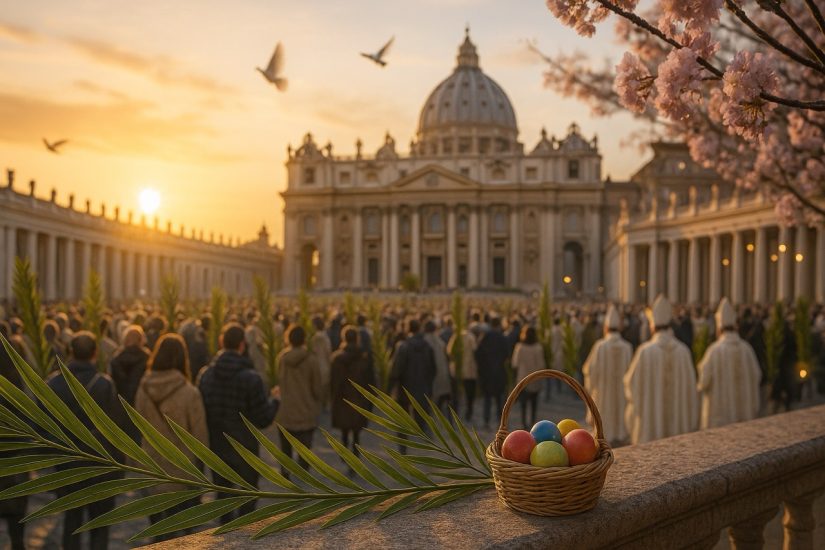
Easter, one of the greatest holidays in the Christian world, symbolizes the resurrection of Jesus Christ and the triumph of life over death. More than just worship and ceremonies, it transforms into a unique travel experience around the world, with processions spilling out into city streets, music, colorful eggs, local cuisine, and local rituals. It's not for nothing that it's known in the Orthodox tradition as the "festival of holidays": a time of hope and renewal for believers, and a week of cultural immersion and photography for travelers.
Headlines
- 1 When is Easter celebrated? (A concise calendar guide)
- 2 Easter symbols: Eggs, rabbits, bread
- 3 Easter in Catholic and Orthodox traditions
- 4 The Best Easter Experiences Around the World
- 4.1 Rome & Vatican – Universal message, universal crowd
- 4.2 Jerusalem, Church of the Holy Sepulchre – Holy Fire ceremony
- 4.3 Spain, Seville – Semana Santa: Vibrant processions, heavy footsteps
- 4.4 Greece – Corfu's "pot throwing" tradition & Epitafios
- 4.5 Germany & Central Europe – Markets, fires and family rituals
- 5 Easter travel planning: booking, etiquette, safety
- 6 Easter-friendly route combinations
- 7 Frequently asked questions
- 8 Why should I travel during Easter?
When is Easter celebrated? (A concise calendar guide)
Easter does not fall on the same day every year. Since the First Council of Nicaea (325 AD), it has been calculated as the "Sunday following the first full moon after the vernal equinox." Because Western Christianity uses the Gregorian calendar, while many Orthodox churches use Julian-based ecumenical rules (especially for Easter calculation), the dates can vary from year to year. In Western tradition, Easter Sunday typically falls between March 22 and April 25.
Hint: When planning your trip, look at the local calendar, not just the flight date; Catholic and Orthodox calendars may have Easter on different days in the same year.
Easter symbols: Eggs, rabbits, bread
The Easter egg is an ancient symbol of new life. In Christianity, it has long been associated with the empty tomb of Christ; in the Orthodox world, in particular, eggs dyed red are blessed and placed in family baskets. Today, in the West, chocolate eggs and egg hunts are a favorite among children.
Easter in Catholic and Orthodox traditions
In Catholic and Protestant communities, Holy Week begins with Palm Sunday, continues with Thursday and Friday services, and culminates with the Easter Vigil and Sunday Mass. In the Orthodox tradition, Easter is experienced with profound spiritual intensity as the "festival of festivals," with the theme of resurrection permeating all worship.
The Best Easter Experiences Around the World
The following routes are must-see destinations for any traveler, combining religious observance with local culture, music, gastronomy, and street atmosphere.
Rome & Vatican – Universal message, universal crowd
Easter morning's Mass and the Urbi et Orbi prayer in St. Peter's Square are one of the busiest yet most captivating times to visit Rome. The official calendar announces the 2025 Easter Sunday Mass in St. Peter's Square in the morning; Vatican channels update the schedule details each year. The 2025 Easter morning celebrations are announced in the Vatican's official calendar, and Pope Francis's message is published in Vatican News. There are no seats; the Mass is open air and free, but the barriers open early—arrive early to account for security checks.
Traveler tip:
- If possible, arrive at the square between 07:30 and 08:00; prepare an umbrella, hat, water and snacks.
- Some museums/visits may have partial closures or different hours during Easter week; check tickets for the Colosseum and Vatican Museums in advance.
Jerusalem, Church of the Holy Sepulchre - Holy Fire ceremony
The Holy Fire ceremony is a centuries-old tradition that takes place on Easter Eve (Holy Saturday) in the Church of the Holy Sepulchre in Jerusalem according to the Orthodox calendar. The fire, lit by the Greek Orthodox Patriarch from the sacred site, is distributed among the faithful and, most years, is flown to different countries. In recent years, restrictions have been imposed on the number of participants for safety and capacity reasons. Reservations are nearly impossible, so one must endure heavy security and barricades in the Old City from early morning onward.
Traveler tip:
- The Old Town streets can get extremely crowded; the most comfortable viewing may be from surrounding rooftops/terraces.
- Move as a group, wear closed shoes, and carry water.
Spain, Seville – Semana Santa: Enthusiastic processions, heavy steps
Seville's Holy Week processions, with their giant parades of centuries-old brotherhoods (cofradías), marches and saetas, are among the most impressive religious events in Europe. From Palm Sunday to Easter Numerous processions traverse the city daily; all routes pass the Cathedral at some point. Local travel guides detail the best vantage points and daily schedules. (Note: Some processions in the south were canceled in 2024 due to storms and heavy rains; be sure to check the weather forecast.)
Traveler tip:
- Narrow streets in the old town can be blocked; plan an alternative route.
- Night processions are magical for photography; have your ISO-low light settings ready.
- Sample local Easter sweets like Torrijas.
Greece – Corfu’s “pot throwing” tradition & Epitafios
Orthodox Easter is particularly beautiful in the villages and islands of Greece. On Holy Saturday morning in Corfu, large red ornate jugs called "Botides" are thrown from balconies into the street; the joy of the "first resurrection" fills the streets. On the same island and the Ionian Islands, the Epitaphios (a floral sarcophagus symbolizing the body of Jesus) and marching bands create a powerful audiovisual experience. Local interpretations also exist, such as the launching of the Epitaphios in places like Tolo on the Peloponnese coast.
Traveler tip:
- During botides, ceramic shards may splash under crowds; find a safe angle.
- On Sundays, roast lamb and red egg tossing are essential items on the table.
Germany & Central Europe – Markets, fires and family rituals
Easter markets (Ostermärkte) in Germany celebrate the beginning of spring with handmade decorations, painted eggs, and outdoor activities. Berlin's markets around Domäne Dahlem, Karl-August-Platz, and Potsdamer Platz are ideal for the urban explorer. In some areas, Osterfeuer (Easter fire) ceremonies are common, especially in the north and neighboring countries (Netherlands etc.) are common.
Traveler tip:
- Plan your shopping on Saturday, as markets may be closed on Sunday.
- It's family-oriented, with fun workshops and egg hunts for travelers with children.
Easter travel planning: booking, etiquette, safety
Early booking is required: Easter coincides with the spring holidays in Europe. Flights and central accommodations sell out quickly, so check at least 6–8 weeks in advance.
Dress and respect:
- When attending worship services, wear clothing that covers shoulders and knees.
- Follow the warnings of local officials on the procession routes; do not cross barriers to take close-up pictures of sacred objects.
Photography:
- For low light on mock-ups, plan on an f/1.8–2.8 lens, ISO 1600–3200; a monopod will do the trick to reduce vibration.
- The use of flash is often prohibited inside the Vatican and cathedrals.
Crowd management and security:
- Jerusalem and Seville Places like these have safety barriers and signposts; go early, and bring water and light snacks.
- Set a meeting point when traveling with children; local phones eSIM define the plan.
Halal/vegetarian options:
- Rome and in Seville, vegetarian/seafood alternatives abound alongside classic cuisine; bacalao (salted cod) and chickpea tapas appear on Holy Week menus.
- Although in the Orthodox geography, meat-based tables are set on Easter Sunday (lamb, tsoureki), until Saturday night fast It is tradition.
Easter-friendly route combinations
- Rome + Florence (5–7 days): Sunday morning at the Vatican, the next day a leisurely stroll along the Tiber; a Renaissance break with spring markets in Florence.
- Seville + Granada (1 week): The first days were the Seville processions, the Alhambra in Granada in the middle of the week and the tranquil Nasiri texture in the gardens.
- Athens + Corfu (6–8 days): In Athens Acropolis Museum and Plaka; Botides and bands in Corfu on Easter Eve.
- Jerusalem + Tel Aviv (5–6 days): Jerusalem on the day of the Holy Fire, followed by a relaxing break on the shore and exploring the modern city.
- Central Europe from Berlin (1 week): Berlin Easter Sundays, followed by riverside walks on the Dresden/Prague line.
Frequently asked questions
Are museums and shops open on Easter?
Varies by country and day. Easter Monday is celebrated in many Europe It is a public holiday in your country; programs may be shortened. Italy ve SpainThe Sunday/next day closing rate is high in (General holiday period: Easter Friday and Monday are often holidays in the West).
Do I need a ticket for the Vatican mass?
The open-air Easter Sunday service is free; barriers open early. Due to security checks and high volumes, arriving early is advantageous.
How should Jerusalem prepare for the Holy Fire?
There are significant crowds and security restrictions in the Old City; allow at least half a day; water and comfortable shoes are essential. Official capacity is occasionally restricted.
Where are the good viewing spots in Seville?
Each procession's departure and arrival times and cathedral passage are scheduled; up-to-date route suggestions and viewing points are listed in local guidebooks. Plan ahead for any weather surprises.
Why should I travel during Easter?
Easter is more than just a holiday: it's a cultural season where you'll read the theme of life, death, and rebirth in architecture, street music, tables, and faces. A universal prayer in Rome, slow-paced processions in Seville, a ceremony of the centuries in Jerusalem, hymns echoing in the sea on the Greek islands, the sweet bustle of markets in Germany… When all of this blends with the fresh light of spring, you'll want to put your camera aside and experience the authenticity of the moment.
When making your plan:
- Check the calendar of the city you are visiting (Catholic/Orthodox),
- Make an early reservation,
- Observe the rules of respect during ceremonies,
- And most importantly, chat with local people, because Easter is a holiday that becomes more meaningful when shared.
PREVIOUS TOPIC
NEXT TOPIC

Similar Threads
Write a Comment
Visitor Comments - 0 Comments