In the heart of Ubud lies a place where hundreds of people pass by every day, but once inside, time slows down: Ubud Palace. The hum of the crowds suddenly gives way to the echo of gamelan sounds as you enter the gates; frangipani flowers fill the air with a sweet fragrance, and stone carvings catch the sunlight and play with shadows. This is more than just a place to visit; Bali It's one of the most visible scenes of its culture. When asked "What to do in Ubud?", one of the first suggestions from locals is always Ubud Palace; not only is it the home of a living dynasty, but it also acts as an open-air cultural stage with the Legong and Barong dances performed every evening. Ubud is worth a visit to add cultural depth to your itinerary, photograph the architectural details, or simply for a few minutes of tranquility. Moreover, because it's located right across from Ubud Market, it's also extremely easy to reach. During the day, you might encounter a procession moving slowly through its courtyards; so the palace isn't a place you'll see and do; it's a stop that offers new surprises every moment. If you want to capture the spirit of Bali in a single frame, watch the changing dance of the light throughout the day around the gates, statues, and traditional pavilions (ballet). In short, Ubud Palace is special enough to be both a beginning and a beautiful finale to your cultural exploration of Ubud.
Where and How to Get There?
Ubud Palace (Puri Saren Agung) is located very close to the intersection of Jalan Raya Ubud, Ubud's main street, and Monkey Forest Road. If you are staying in the center of Ubud, you can reach the palace in a few minutes on foot. If you are coming from coastal areas such as Canggu, Seminyak, or Kuta, plan a car journey of 1–1,5 hours depending on traffic. The most practical options are taxis or chauffeured cars. Rent a car Or a motorcycle. Parking is limited in the center of Ubud, so a motorcycle might be a more flexible option. Within Ubud itself, everything is close together; the palace, the Ubud Market, Puri Lukisan Museum and the Saraswati Temple are all within walking distance. If you'd like, you can tour the palace during the day and purchase tickets for the evening dance show on the same day.
Brief History
The foundations of Ubud Palace were laid by Ubud's ruling family in the early 19th century. The area was under the influence of the Gianyar Kingdom, and Ubud was becoming a hub for artists and clergy. The palace was designed as the heart of both government and social life; artists were patronized here, and traditional dances and music flourished in these courtyards. Following the major earthquake of 1917, the palace underwent significant repairs and parts were rebuilt, further showcasing the mastery of local craftsmen in stone and woodwork. Today, members of the royal family live in parts of the palace, while the public areas are open to visitors. Evening performances demonstrate the palace's continued cultural role throughout history.
Architectural and Artistic Features
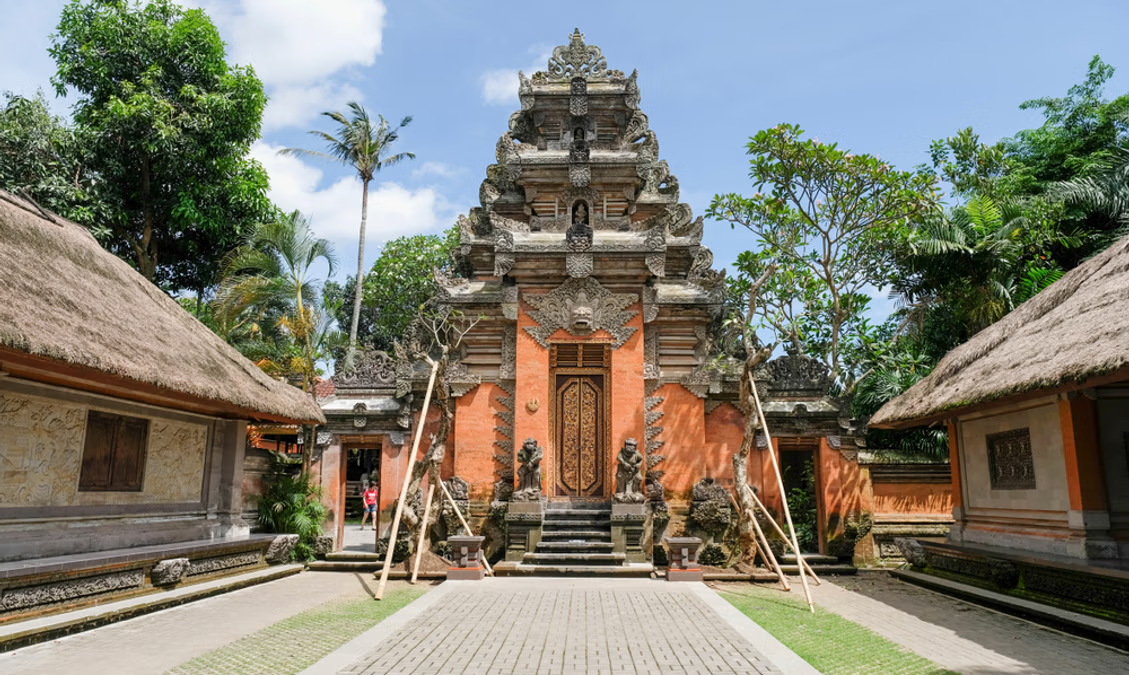
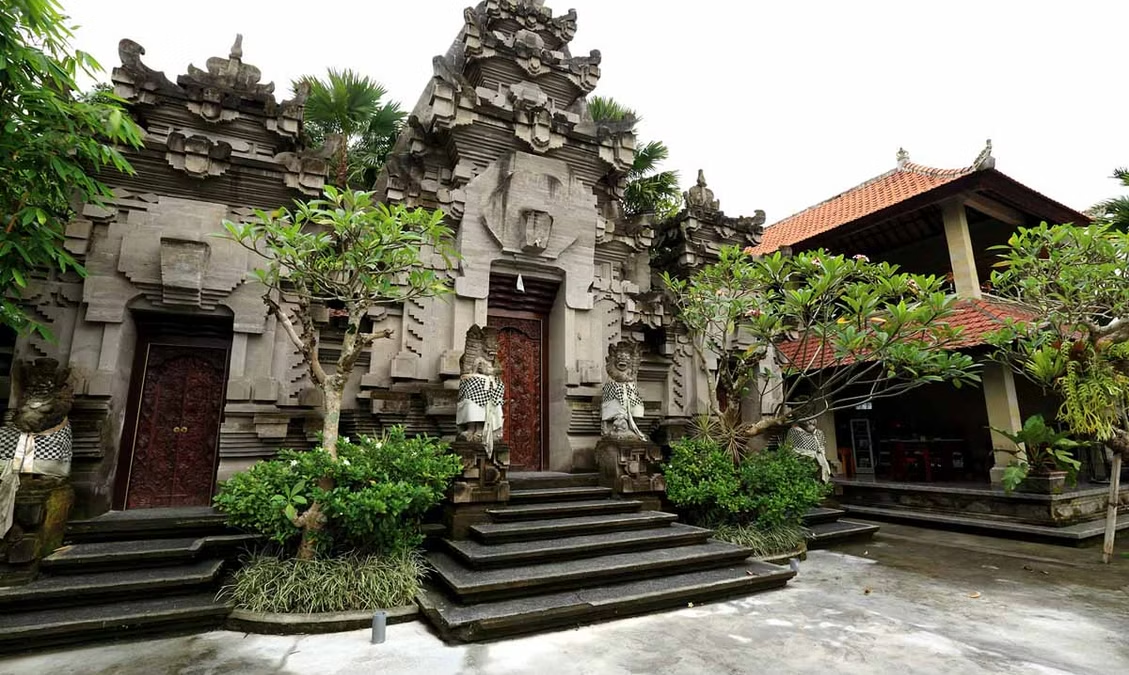
Ubud Palace epitomizes traditional Balinese architecture. Its walls, composed of red brick and sandstone, are notable for its candi bentar (split gate) at the entrance, and the majestic kori agung gates that open onto the inner courtyards. Open pavilions (bales) arranged around the courtyards host ceremonial events, gatherings, and dances. The floral motifs, mythological beings, and guardian figures found on the doorways and capitals reflect Balinese cosmology and the belief in protection. The canang sari (daily offerings) placed in front of the statues remind us that the palace is a living ritual space. A spacious wantilan (gathering pavilion) serves as a stage for performances. Daylight casts a golden glow on the stone surfaces; the depth of the carvings becomes particularly evident in the early morning and late afternoon hours. The wooden carved doors, developed by master craftsmen over the years, are a must-see for photography enthusiasts.
Visit Information
Ubud Palace is generally free to visit during the day; separate tickets are required for evening dance performances. Access to some areas may occasionally be restricted due to ceremonies or special events. When planning, take note of the following tips:
- Opening/Visiting Hours: During the day, the courtyards are open to the public; in the evening, some areas may be closed due to show preparations.
- Dance Performances: Traditional dances like Legong and Barong usually begin in the evening and last approximately 60–90 minutes. Tickets are available at the palace entrance during the day.
- Dress and Manners: The palace is a living and ceremonial space. Choose a light-weight top that covers your shoulders; approach offerings and processions with respect and do not block their path.
- Photo/Video: Ideal for daytime photography; avoid flash during demonstrations. Permits may be required to fly drones.
- Weather and Season: Tropical climate; more comfortable during the dry season (approximately April–October). Be prepared for brief showers during the rainy season (November–March).
- Transportation and Parking: Parking is limited in central Ubud; walking and motorcycling are practical options.
- Security/Environment: Be careful with personal belongings; keep an eye on the offerings on the ground to avoid stepping on the votive baskets (canang sari).
Photography Tips and Tricks
Ubud Palace offers a natural setting for photographers. The symmetry of the main entrance, the gold-leafed details on the doorways, and the guardian statues are perfect for close-up shots. The woodwork of the ballet pavilions in the inner courtyards, combined with the shadows of the columns, creates dramatic compositions. In the morning, the light is soft, highlighting the depth of the carvings. In the evening, warm tones make the stone texture glow. A wide-angle lens can capture the perspective from the gate to the courtyard, and a lens around 50mm can capture portrait-like detail. On performance nights, try a high ISO and a shutter speed above 1/250 to freeze action in low light; but avoid flash. The vibrant colors of the clothing contrast with the earthy tones of the Balinese architecture, enriching your frame. Arrive early to avoid the crowds; a short wait outside the gates in an empty courtyard will yield "that one" shot.
Other Nearby Places to Visit
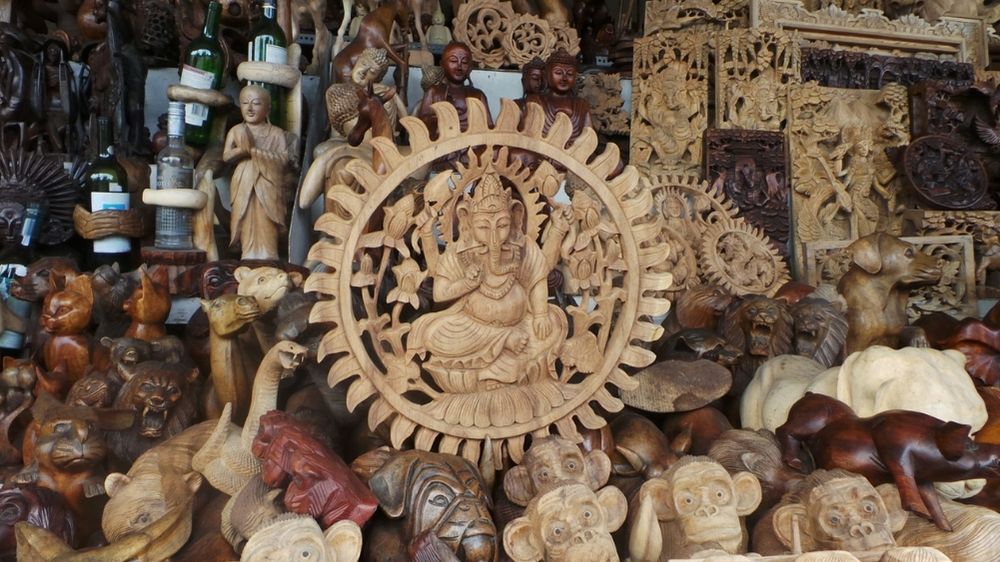
Ubud Palace, with its central location, sits at the heart of a walking cultural hub. Just across the street, Ubud Market is ideal for local handicrafts, textiles, and souvenirs. A few minutes' walk takes you to the lotus pool of Pura Taman Saraswati, where you can capture stunning sunset photos. Museum Puri Lukisan offers a tranquil respite with examples of classical and modern Balinese painting and carving. A little further west, you can take a golden hour stroll along Campuhan Ridge Walk, or further east, explore the mystical atmosphere of Goa Gajah (Elephant Cave). A little north of Ubud, the Tegallalang Rice Terraces are a wonderful escape for both photography and scenic views in the cool of the morning. If you're interested in art, the Blanco Renaissance Museum is a short motorbike ride away.
If you ever find yourself in Ubud, add Ubud Palace to the top of your list; explore the architectural details during the day, and be captivated by the magic of Legong dance in the evening. It's a must-see if you visit Ubud. Also, if you'd like more ideas for your trip... Ubud Travel Guide I also recommend reading our article on Places to Visit in Ubud. This destination, where you can experience Balinese culture in one breath, will give you one of the most unforgettable moments of your Ubud trip.