
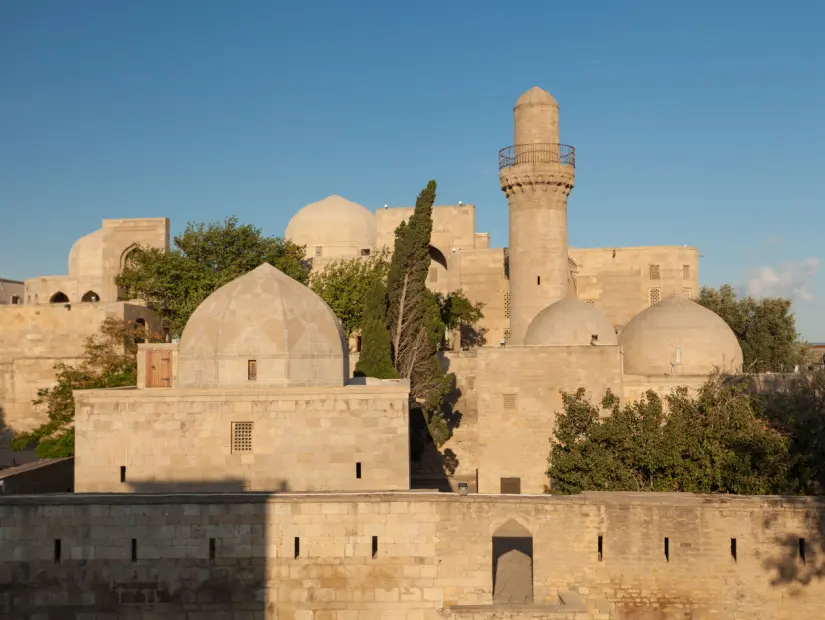

Places to Visit in Baku

Baku, the shining star of the Caucasus, is the capital and largest city of Azerbaijan, located on the shores of the Caspian Sea. With a population of approximately 2,4 million, the city is the economic, cultural and political heart of the country, and has a surface area of 2.130 km². Expertly blending modern skyscrapers with historic streets, Baku is the lowest-lying capital in the world, approximately 28 meters below sea level. With both the Inner City (İçərişəhər), which is on the UNESCO World Heritage List, and the modern Flame Towers, it offers a fascinating atmosphere where the past and the future intertwine at every step. In this article, we will explore the must-see places in Baku, along with their historical and cultural heritage.
Historical Places to Visit in Baku
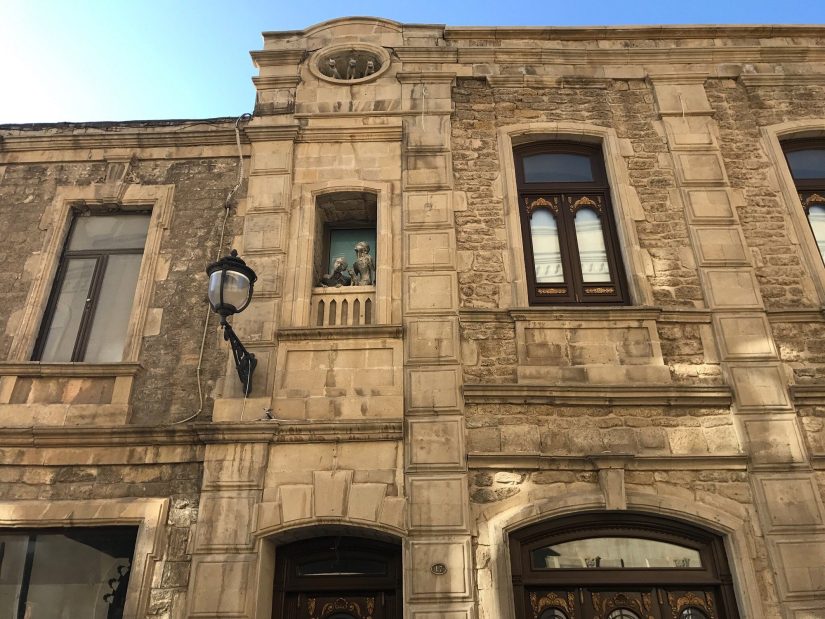
Monument to Lovers and Cats
The Lovers and Cats Monument, which you come across while walking on the streets of Baku, is a lovely and romantic piece that reflects the elegant spirit of the city intertwined with art. Located on a quiet corner near the Old City, this bronze sculpture group depicts a couple in love holding hands and cats roaming around them. Creating both an emotional and warm atmosphere, this monument shows visitors not only the historical and architectural aspects of Baku, but also its human and emotional aspects. A source of a short break, a beautiful photo and a pleasant smile for travelers, the Lovers and Cats Monument is one of the sweetest examples of the importance Baku gives to art reflected on the streets.
Baku Ateshgah (Fire Temple)
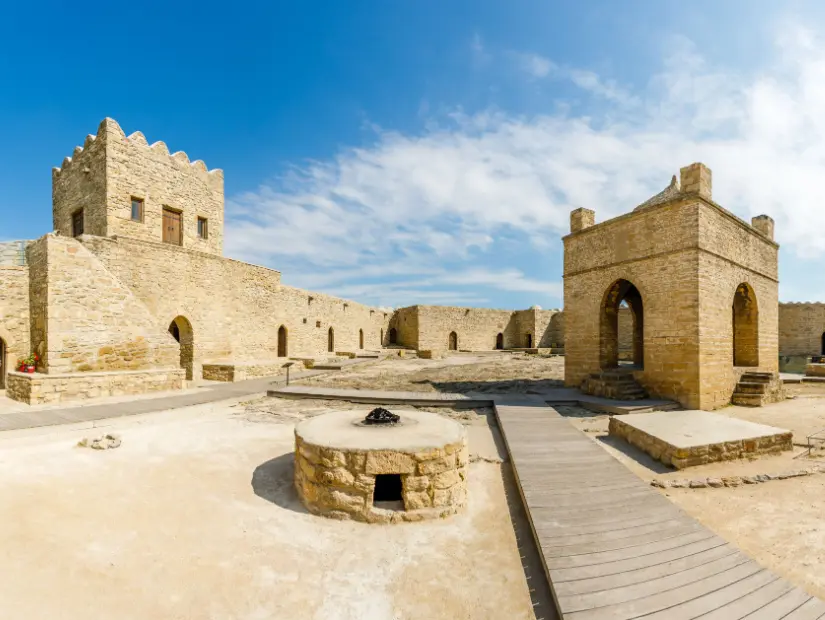
Located in the Surahanı town of Baku Ateshgah Temple (Atəşgah) is a unique structure that has served as a center of worship for fire-worshipping communities throughout history, and is notable for its mystical atmosphere. Built by Hindu and Zoroastrian merchants in the 17th and 18th centuries, this Fire TempleIt housed sacred flames that burned continuously as underground gases rose to the surface and ignited spontaneously. With its pentagonal courtyard and central altar, Ateşgah offers travelers an impressive experience in terms of both architecture and religious history. Absheron PeninsulaIt is one of the most mystical stops in Baku. For those who want to touch the beliefs of the past and feel the spirit of Azerbaijan, the "land of fires," this sacred place is a must-see.
Baku Old City (Icheri Sheher)
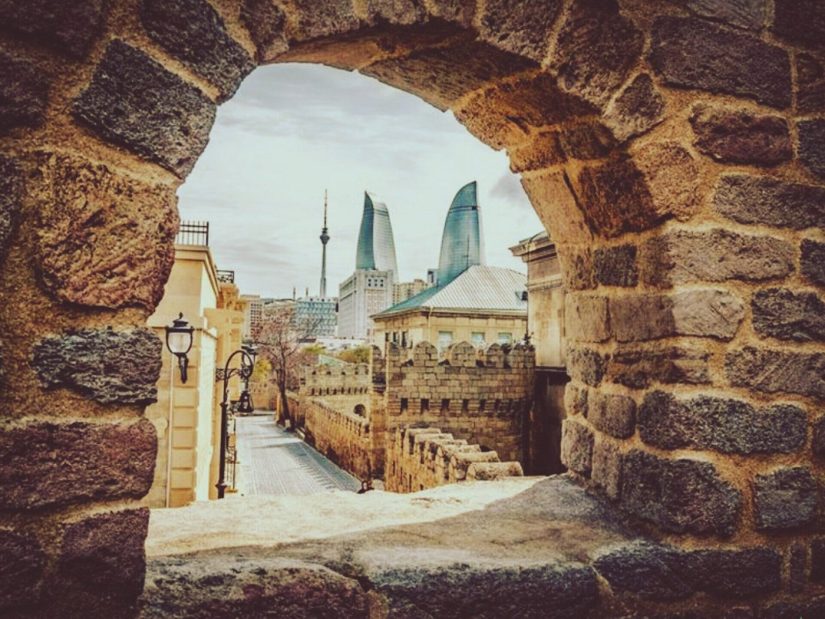
The place where you can best experience the soul of Baku is undoubtedly Baku Old City, also known locally as Icheri Sheher, a UNESCO World Heritage Site. With its labyrinthine narrow streets, stone-walled buildings, and a story hidden around every corner, this area takes you back centuries and is the oldest settlement in Azerbaijan. A veritable open-air museum for travelers, Icheri Sheher, with its historical fabric stretching from the Middle Ages to the present day, is an unmissable stop for those who want to see Baku's modern face alongside its historical identity. Palace of the Shirvanshahs, Maiden's Tower With its unique structures such as traditional carpet workshops, this region offers an unforgettable experience to every visitor who ventures into its exploration.
Baku Fuzuli Statue
The Fuzuli Statue is one of the meaningful stops reflecting the cultural texture of Baku. Azerbaijan It commemorates Muhammad Fuzuli, one of the most important figures in Turkish literature. Located in Fuzuli Square in the city center, this monument is not only a magnificent statue but also a symbol of the people's deep respect for the poet. Fuzuli, a leading figure in classical Eastern literature, writes poems on art and love, literally coming to life around the statue. For travelers, the Fuzuli Statue is a must-see cultural symbol for those seeking to experience the historical and intellectual spirit of Baku.

Baku Funicular
For travelers who want to discover Baku’s unique skyline from a different perspective, the Baku Funicular offers a delightful and nostalgic transportation experience. This system, which was put into service in 1960 and is Azerbaijan’s first funicular line, operates on a steep slope between Denizkiyisi Boulevard and Dag Park (Martyrs’ Lane). During this short but impressive journey of approximately 455 meters, the view of modern Baku stretching out against the Caspian Sea offers visitors a visual feast. Ideal both as transportation and as a panoramic viewing point, the Baku Funicular promises an unforgettable experience for those who want to watch the city from above.

Baku Khan Palace
Located in the heart of Baku, within the historical borders of Icheri Sheher, Baku Khan Palace is one of the rare traces of the city’s khanate period. Built in the 18th century during the Baku Khanate, this elegant structure was used as the local administrative center of the period and was the residence of the khans. The structure, which has both traditional Azerbaijani stonework and Eastern palace architecture in its architecture, has a rich history behind its simple appearance. For travelers, Baku Khan Palace offers a fascinating exploration area not with its eye-catching grandeur, but with its deep history, strategic location and walls that bear traces of the past. It is one of the stops not to be missed for those who want to step into the city’s khanate past.
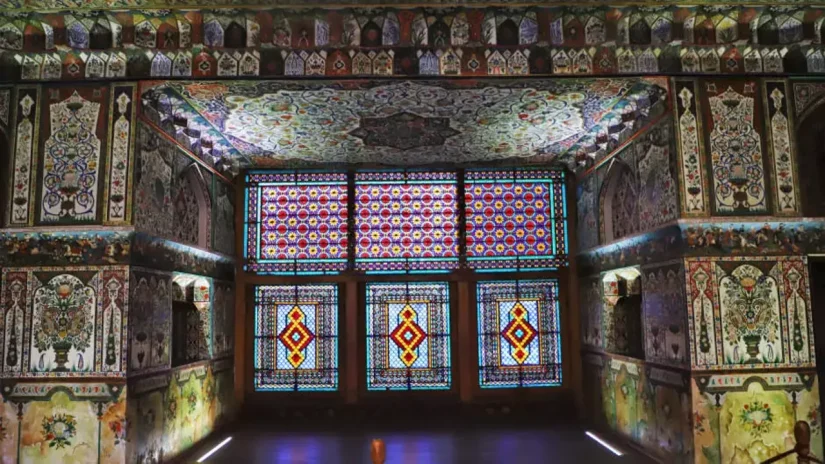
Baku Government House
Rising in the center of Baku, adjacent to Freedom Square, the Baku Government House (Hökumət Evi) is an impressive example of Soviet architecture that leaves its mark on the city’s skyline. Built in the 1950s, this monumental structure draws attention with both its fascinating architecture and strategic location. This magnificent building, which houses government offices, offers travelers an architectural experience where history, power, and aesthetics intertwine with its facade decorations, giant columns, and symmetrical structure. The Government House, which takes on a striking appearance especially when illuminated at night, is one of the must-see landmarks that reflect Baku’s official identity.
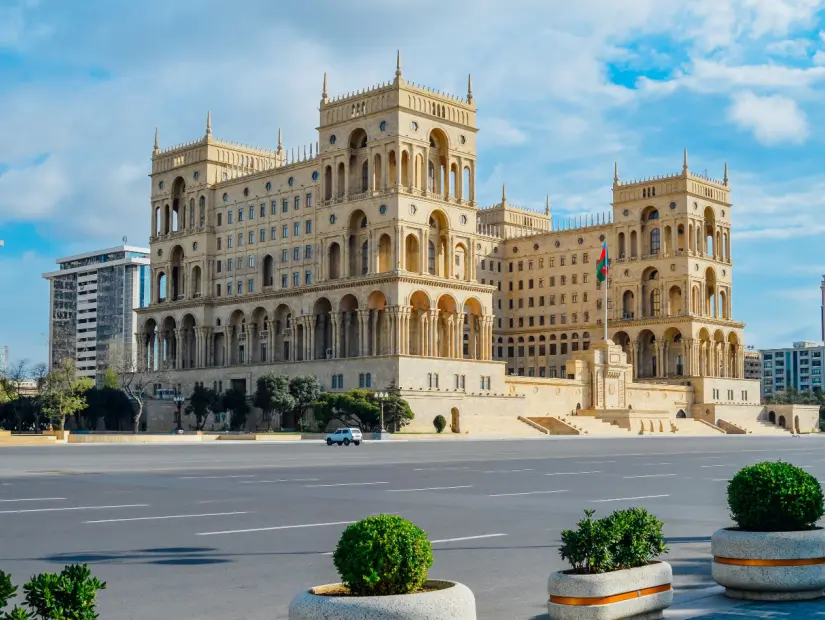
Baku Maiden Tower
The Maiden's Tower (Qız Qalası), which has become the symbol of Baku, rises magnificently in the southeast of the Old City, overlooking the Caspian Sea. This mysterious structure, approximately 29 meters high, attracts the attention of travelers with its architecture and the legends told about it. Although its exact origin is unknown, there are various theories that it was used as a Zoroastrian temple, a watchtower or an astronomy center. This historical tower, which is on the UNESCO World Heritage List, is one of the most well-known structures not only in Baku but also in Azerbaijani culture. Visitors who climb the tower have the opportunity to watch the breathtaking view of the city and follow the stories that have been told for centuries.

Baku TV Tower
One of the eye-catching structures dominating the skyline of Baku, the Baku Television Tower holds the title of being the tallest structure in Azerbaijan with a height of 310 meters. This giant tower, which was put into service in 1996, is of great importance not only in the field of communication and broadcasting, but also in terms of tourism. Located at a high point in the city, the tower offers travelers a breathtaking view stretching from the Caspian Sea to the Absheron Peninsula. Offering visitors unforgettable moments with its observation deck and revolving restaurant, the Baku Television Tower is an ideal stop for those who want to watch the city from above and discover the panoramic beauty of modern Baku.

Bukhara Caravanserai
Located within the borders of Baku Old City (Icheri Sheher), the Bukhara Caravanserai is one of the important structures reflecting the historical texture of the city, where merchants coming from the Silk Road stayed in the Middle Ages. This caravanserai, thought to have been built in the 15th century, was built to accommodate merchants coming from the city of Bukhara in Central Asia, and takes its name from there. The structure, which transports visitors back centuries with its stone arched rooms arranged around a courtyard, sturdy walls and classical architecture, now serves as a restaurant, combining the historical atmosphere with a modern experience. For travelers, the Bukhara Caravanserai is not only a historical structure, but also an opportunity to witness Baku’s cultural past.
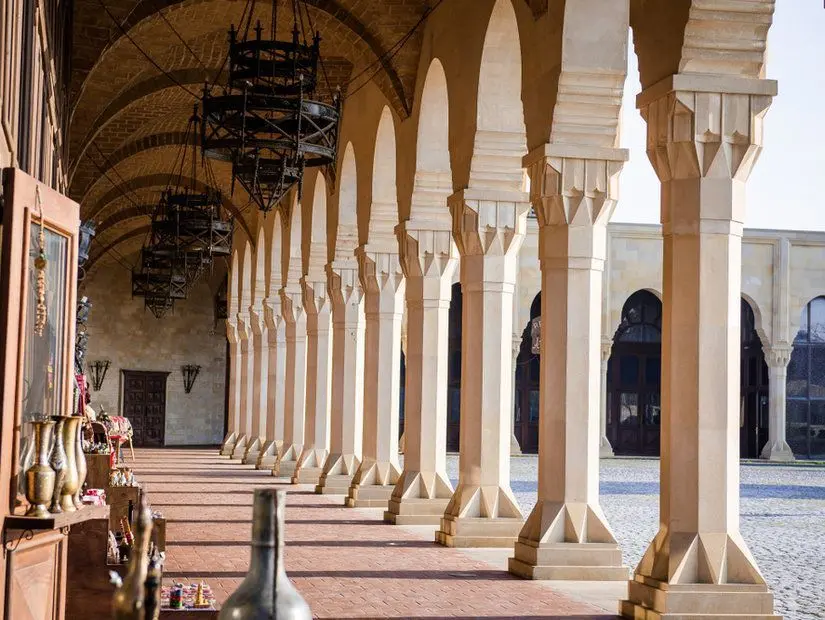
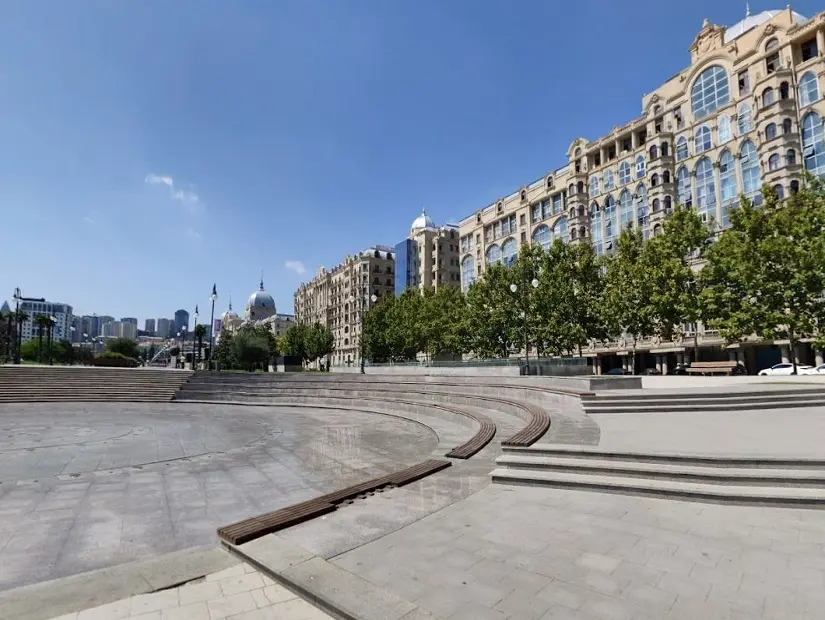
Fountains Square
Fountains Square (Fəvvarələr Meydanı), one of the liveliest and most popular spots in Baku, is the heart of the city’s social life. Located right next to the historical Icheri Sheher, this square is a popular stop for both locals and travelers to relax, shop, and breathe in the city’s atmosphere. Named after its ornamental pools and aesthetic fountains, the square functions as a true showcase of the city with its vibrant structure and surrounding shops, cafes, and restaurants throughout the day. Fountains Square, which takes on a romantic ambiance especially in the evening with its illuminations, is a candidate to be one of the unforgettable stops of your Baku trip.

Double Castle Gate
The Twin Fortress Gate, one of the magnificent entrances to the Old City of Baku (Icheri Sheher), is a passage through time for every traveler who begins to explore the capital of Azerbaijan. This historic gate, which has survived from the Middle Ages to the present day, is actually a combination of two separate city walls and is one of the most important parts of the city's defense system. The Twin Fortress Gate, which makes visitors feel the ancient past of Baku with its thick stone walls, coats of arms and inscriptions, also stands out as one of the most photogenic spots in the Old City. This impressive structure, which greets you the moment you step into Icheri Sheher, is a candidate to be the starting point of your historical journey in Baku.
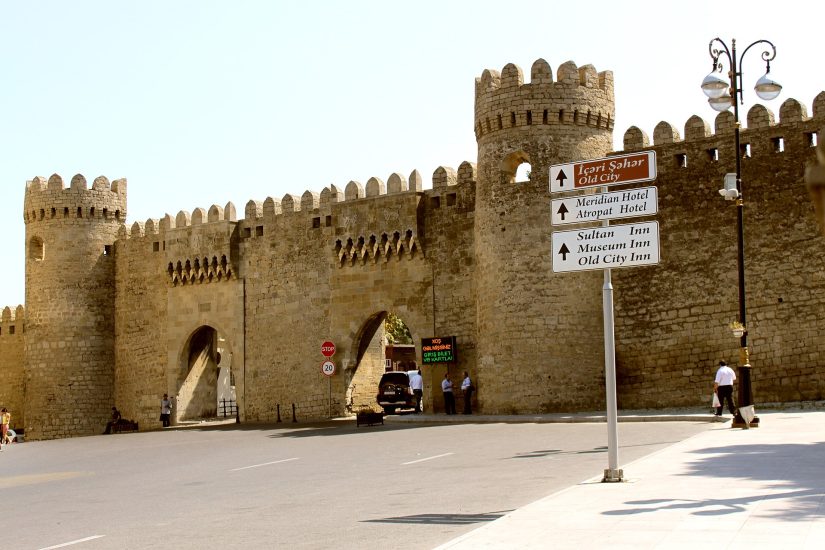
National Flag Square
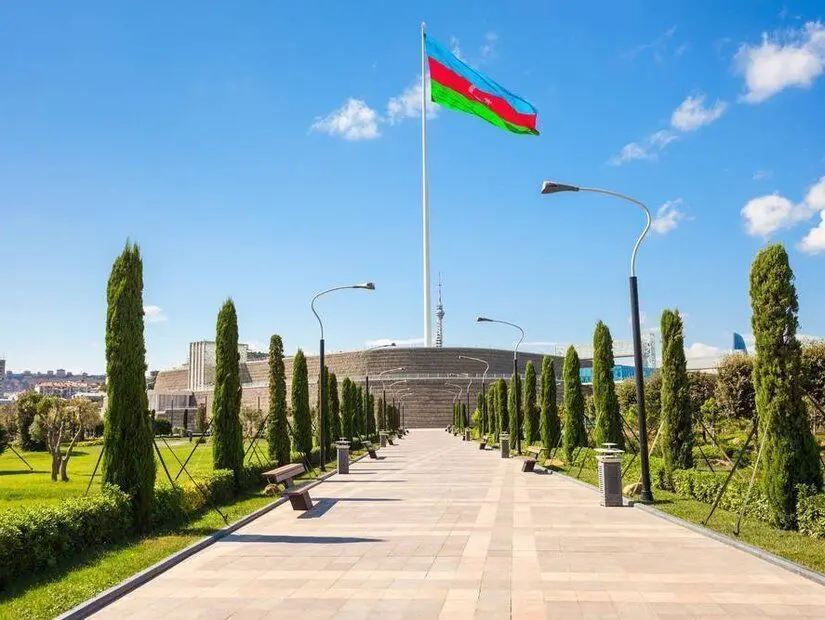
One of the iconic structures of Baku, the National Flag Square (Dövlət Bayrak Meydanı) is a monumental area reflecting Azerbaijan’s national unity and pride in independence. Home to one of the world’s largest flagpoles, the giant Azerbaijani flag reaching 162 meters high, the square offers an impressive view on the shores of the Caspian Sea. A part of the modern city skyline, this square is not only a touristic stop; it also pays tribute to the country’s history and struggle for freedom. Both a photo stop and a meaningful stop for travelers, the National Flag Square is one of the impressive symbols of a Baku trip.
Quadrilateral Tower (Dördbucaqlı Qala)
One of Baku’s historic defensive structures, the Quadrangle Tower (Dördbucaqlı Qala) is a little-known but impressive heritage site within the Old City. Named after its quadrangular plan, the tower was built during the Middle Ages as part of the city’s defensive line. With its thick stone walls, crenellated windows and simple yet powerful architecture, it sheds light on Baku’s military history. For travelers, this structure is a special stop that deserves to be explored, both for its architectural simplicity and the historical perspective it offers from its location. Although it is not visible, the Quadrangle Tower is one of Baku’s silent but resilient guardians.

Eternal Flame Monument
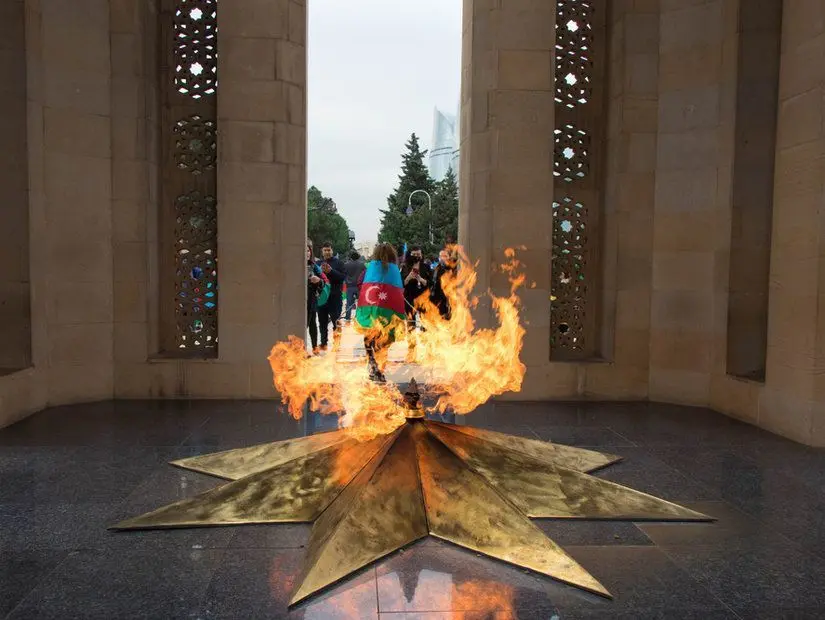
One of the most meaningful and emotional stops in Baku, the Eternal Flame Monument (Əbədi Alov Abidəsi) is an impressive symbol erected in memory of the martyrs. Located on a hill overlooking the Caspian Sea in the Martyrs’ Alley, this monument was built to honor the heroes who lost their lives in Azerbaijan’s struggle for independence. With its ever-burning flame, this monument has become a symbol of the pain and pride that has left its mark on national memory, offering visitors both a magnificent view and a place for deep thought. For travelers, the Eternal Flame Monument is not just a monument; it is a meaningful stop where they can pay their respects to Azerbaijan’s history.
Isa Bek Hacinski House
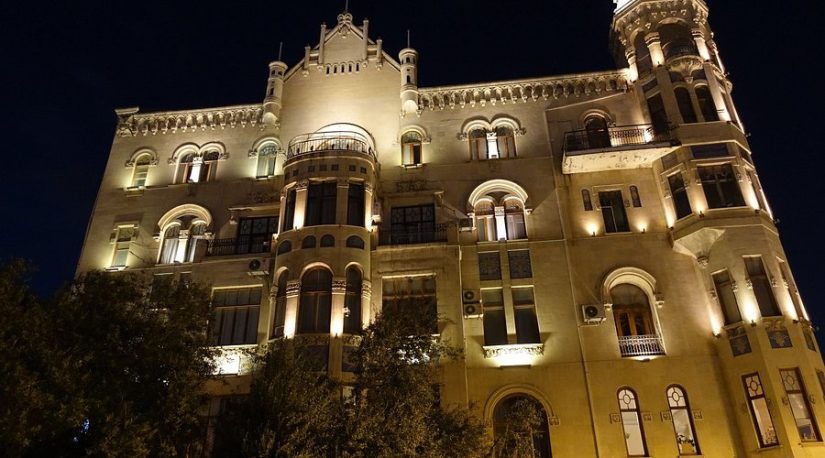
While walking through the streets of Baku, one of the rare structures where history and art meet is the Isa Bek Hajinski House. Built in the late 19th century, this magnificent mansion belongs to Azerbaijan’s renowned engineer and statesman Isa Bek Hajinski. Its exterior, which skillfully blends neoclassical and Eastern architecture, fascinates visitors with its ornaments and aesthetic details. For travelers who want to see how Baku’s rich oil era is reflected in its architecture, this structure is an important stop to understand the city’s cultural fabric. Hosting various events and exhibitions today, this elegant mansion combines the elegance of the past with today’s modernity, offering an unforgettable discovery in Baku.
Mukhtarov Palace (Palace of Felicity)
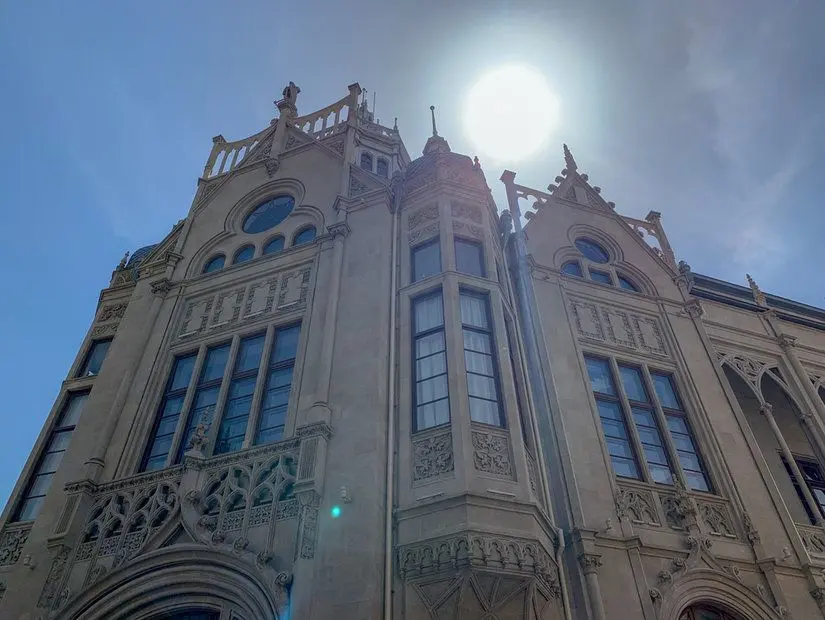
One of the architectural jewels of Baku, Mukhtarov Palace, also known as Saadet Palace, fascinates travelers with both its romantic story and dazzling architecture. Built in the early 20th century by the wealthy Azerbaijani oil baron Murtuza Mukhtarov for his wife Liza, this palace was inspired by French Gothic architecture and is almost a Europe It was designed to resemble a castle. The structure, which draws attention with its fine stonework, elegant towers and stained glass windows on its exterior, currently serves as a wedding hall. Standing out among the cultural stops in Baku with both its love-filled story and architectural aesthetics, Mukhtarov Palace offers a unique discovery that combines romance with history.
Multani Caravanserai
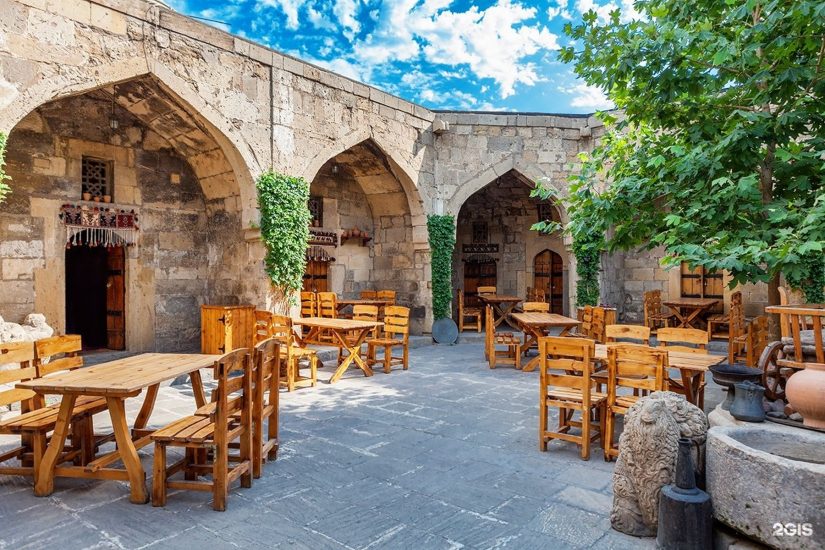
Multani Caravanserai is an original stop for travelers exploring the historic streets of Baku Old City, offering the opportunity to follow the traces of the past. This historical structure, thought to have been built in the 14th century, took its name from merchants coming from Multan, Pakistan, and was one of the important trade stops on the Silk Road. Reflecting the caravan culture of the period with its stone architecture, courtyard structure and arched entrances, Multani Caravanserai serves as a restaurant today, offering its visitors both a historical atmosphere and local flavors. Multani Caravanserai is an authentic place to visit for those who want to combine history, culture and flavor in Baku.
Nizami Ganjavi Monument
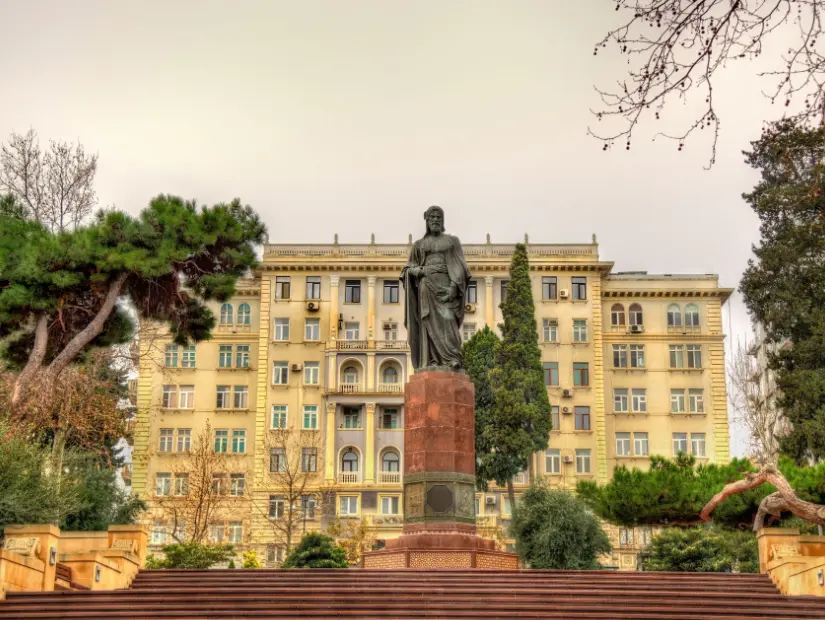
One of the most meaningful symbols reflecting the cultural richness of Baku, the Nizami Ganjavi Monument is a magnificent structure dedicated to the immortal name of Azerbaijani literature, Nizami Ganjavi. Located on Nizami Street in the city center, this monument not only keeps the poet's memory alive; it is also a strong indicator of the value the Azerbaijani people give to art and literature. Built in 1949 and rising on a granite pedestal, the statue offers visitors a peaceful break with its surrounding decorations and green areas. For travelers, the Nizami Ganjavi Monument is a special stop where they can pay a cultural tribute while exploring Baku.
Freedom Square (Azadlik Square)
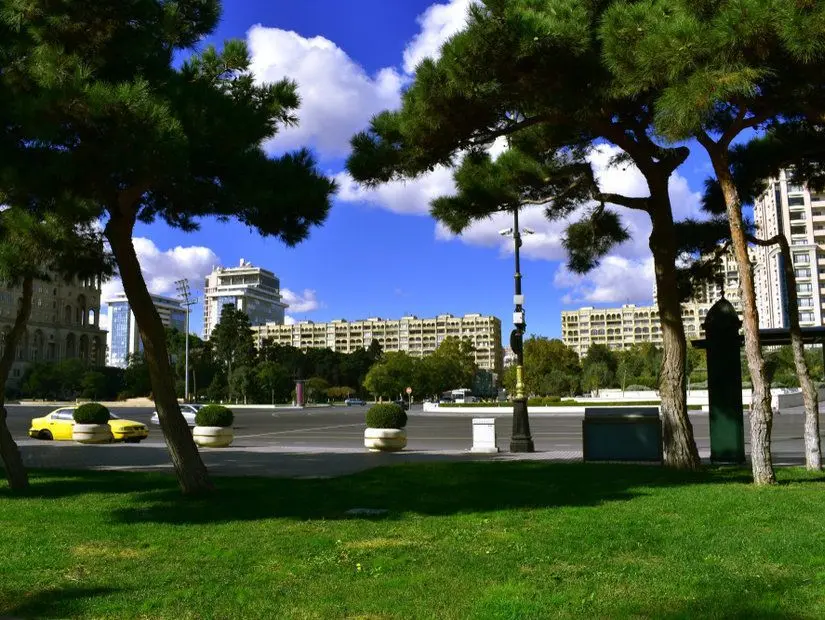
Freedom Square (Azadlıq Square), one of the largest and most iconic areas of Baku, is an important point that has witnessed both the recent history of Azerbaijan and has become the center of modern city life. Known as “Lenin Square” during the Soviet period, this area has gained a strong place in the memory of the people today, taking its name from the concepts of freedom and independence. Surrounded by government institutions, luxury hotels and business centers, the square also hosts national holiday celebrations, marches and cultural events. For travelers, Freedom Square is a must-see stop to observe the dynamism of Baku and its transformation from the past to the present.
Ramana Castle
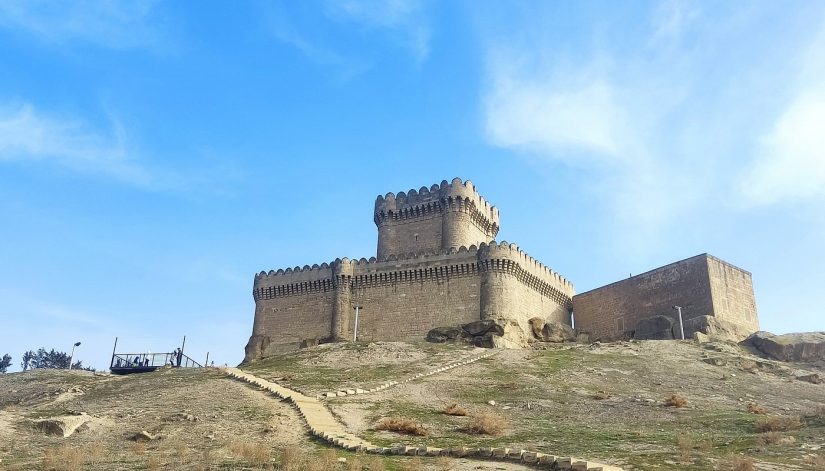
Ramana Fortress, one of the historical treasures of Baku, is located in the town of Ramana, approximately 15 kilometers from the city center. This stone structure, thought to have been built for defense purposes in the 12th century, still silently watches over the region with its height exceeding 15 meters. Drawing attention with its simple and solid architecture, Ramana Fortress bears traces of the Shirvanshah period and offers travelers the opportunity to follow the traces of the past. Visitors who climb the fortress both integrate with the historical texture and encounter a panoramic view extending to the Caspian Sea. With its quiet atmosphere and natural surroundings, Ramana Fortress is an ideal stop for those looking for an original discovery point away from the crowds in Baku.
Socar Tower
Standing out in Baku’s skyline, the Socar Tower is not only the tallest building in Azerbaijan, but also the headquarters of the country’s energy giant SOCAR (Azerbaijan State Oil Company) and symbolizes the country’s economic power. Reaching a height of 209 meters, this impressive double-hulled structure was designed as a modern engineering marvel resistant to earthquakes and winds. Reflecting Baku’s contemporary architectural vision with its unique wave-shaped architecture, the Socar Tower offers an impressive visual feast, especially when viewed from the city center or the coastal boulevard. For travelers, this structure proves that Baku is a city that inspires admiration not only with its history but also with its future-oriented face.

Palace of the Shirvanshahs
Rising in the heart of Baku's Old City Palace of the ShirvanshahsAs one of the most magnificent structures in Azerbaijani history, it invites visitors to delve into the depths of the past. Built in the 15th century by the Shirvanshah Dynasty, this enormous palace complex captivates not only with its architectural elegance but also with details reflecting the political and cultural power of the era. Surrounded by structures such as stone-carved arches, mausoleums, a council hall, a bathhouse, and a mosque, this historical area is one of the most impressive stops for travelers to visit in Baku. A UNESCO World Heritage site, the palace takes you on an unforgettable journey through the traces of a glorious past.

Unity Monument
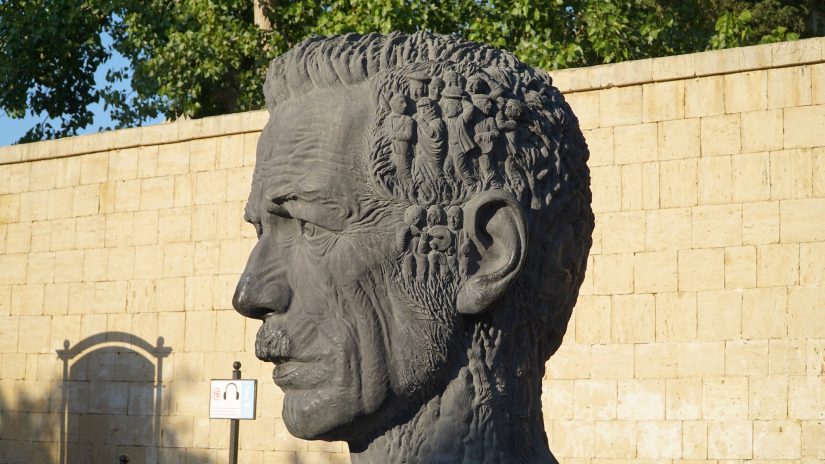
Located in Baku's historic Old City district Unity MonumentThis impressive monument, erected in memory of the master poet Ali Akbar Vahid, is known for its influence on the powerful voice of Azerbaijani literature, Mammad Huseyn Shahriyar. Made of bronze, this extraordinary sculpture depicts not only Vahid's face but also the characters and emotions from his poems in detailed figures on stone. This monument, where art and literature intertwine, offers visitors a profound aesthetic and intellectual experience with its poetic spirit. For travelers, the Vahid Monument is one of the most unique and impressive stops for encountering art on the streets of Baku.
Religious Buildings to Visit in Baku
Ajdarbey Mosque
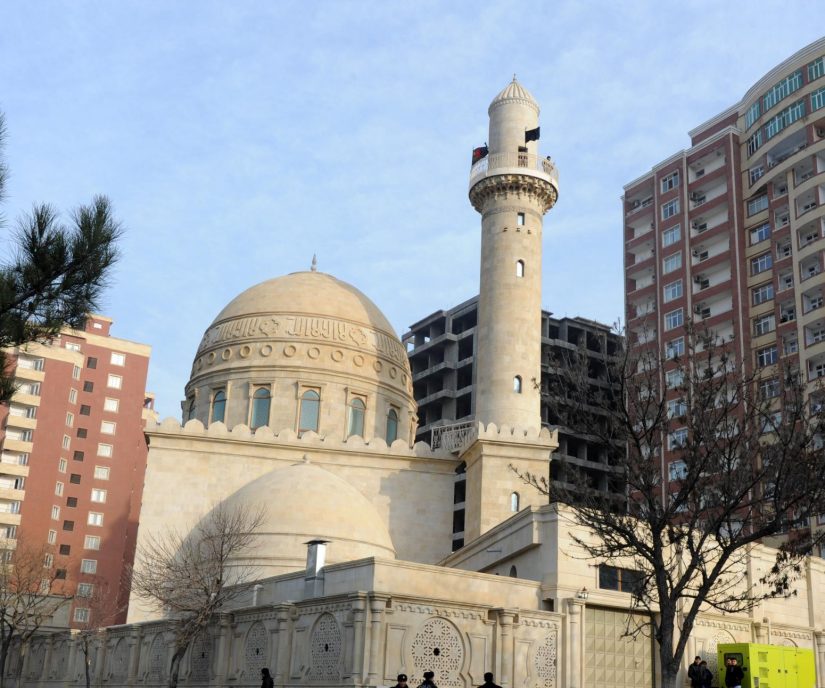
Ajdarbey Mosque, one of the important places of worship reflecting the historical and cultural texture of Baku, is a structure that stands out with its elegant architecture and peaceful atmosphere, built in 1912 by the wealthy philanthropist Haji Ajdarbey. Located close to the city center, the mosque draws attention with its fine stonework on its exterior, classical architectural lines and simple aesthetics in its interior. Standing out with its modest stance among the modern structures of Baku, Ajdarbey Mosque is a peaceful stopover for both worshippers and travelers looking for a spiritual breath in the city. Bringing together history and spirituality, this structure is a must-visit stop for those looking for spiritual balance during their Baku trip.
Baku Heydar Mosque
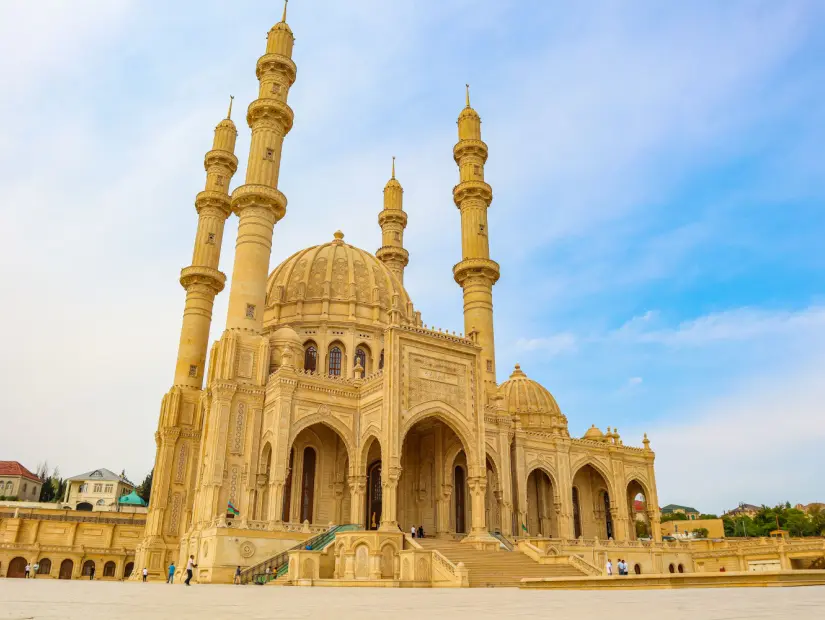
Rising majestically in the Binəqədi district of Baku, the Haydar Mosque is one of the most impressive places of worship in Azerbaijan with both its architecture and spiritual atmosphere. Opened in 2014 and named after Azerbaijan’s national leader Haydar Aliyev, this mosque stands out with its capacity to accommodate thousands of people at a time. Its design, which combines classical Islamic architecture with modern lines, gives the city a fascinating silhouette, especially when illuminated at night. With its marble coatings, high minarets and elegant domes, the Haydar Mosque is not only a place of worship; it is also a magnificent reflection of Baku’s cultural and religious identity. For travelers, this mosque is a must-see stop, offering both peace and aesthetics.
Baku Grand Mosque
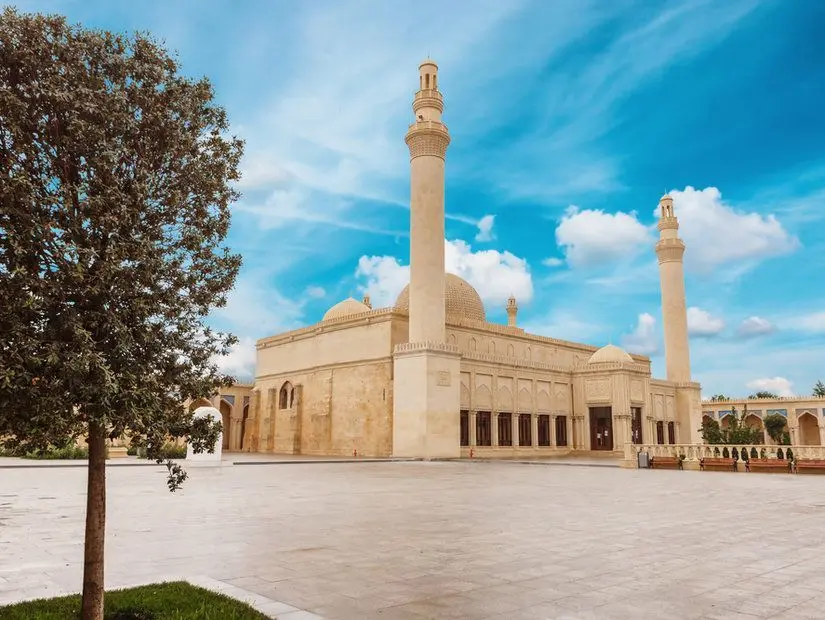
Rising from the narrow streets of Icheri Sheher in the historical center of Baku, the Baku Grand Mosque stands out as one of the oldest and most established places of worship in the city. With its history dating back to the 12th century, this simple yet impressive structure, bearing traces of Seljuk architecture, has served as both a center of faith and culture for centuries. A part of the historical texture with its stone walls, dome and elegant minaret, the mosque attracts the attention of locals as well as travelers visiting Baku. With its silence, spirituality and the historical atmosphere surrounding it, the Baku Grand Mosque is a unique stop for those who want to deeply feel the spirit of the city.
Bibi-Heybat Mosque
One of the most magnificent religious structures in Baku, Bibi-Heybat Mosque is a sacred stop on the shores of the Caspian Sea that impresses visitors with its elegant architecture and deep history. Built in the 13th century during the Shirvanshah period, this mosque was demolished during the Soviet period; however, it was rebuilt in the 1990s, remaining true to its original style. The mosque, which is of great importance in terms of religious tourism, also houses the tomb of a woman believed to be a descendant of the Prophet Muhammad. This structure, which dazzles with its stone carvings, domes and minarets, is not only a place of worship, but also a window into the history and spirituality of the Azerbaijani people. For travelers, Bibi-Heybat Mosque is a spiritual and architectural masterpiece that must be visited in Baku.
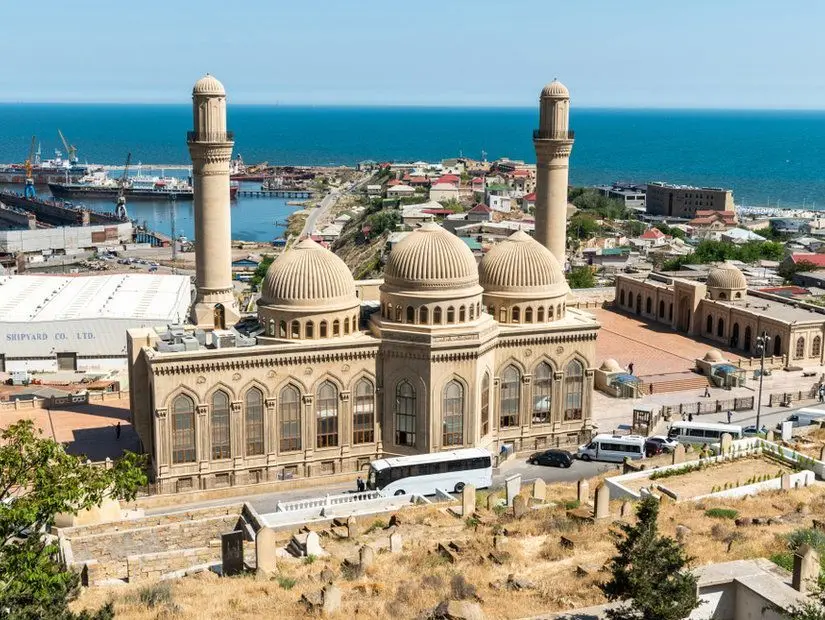
Muhammad Mosque (Siniggala Mosque)
Located in the Old City of Baku, among the streets where history silently whispers, Muhammad Mosque, also known as Siniggala Mosque, is not only a place of worship; it is also one of the symbols of Azerbaijan's resistance. Built in the 11th century, this mosque is considered the oldest mosque in Baku whose minaret has survived to the present day. The name "Siniggala" or "broken castle" comes from the fact that the mosque's minaret was damaged by cannon fire from the Russian navy that occupied Baku in 1723. This structure, which proudly carries traces of the past even with its destroyed minaret, offers its visitors both a spiritual and cultural experience with its historical texture. For travelers, Muhammad Mosque is a monument that leaves a deep mark on Baku's memory; it is worth discovering with the meaning it hides in its simplicity.

Taza Pir Mosque
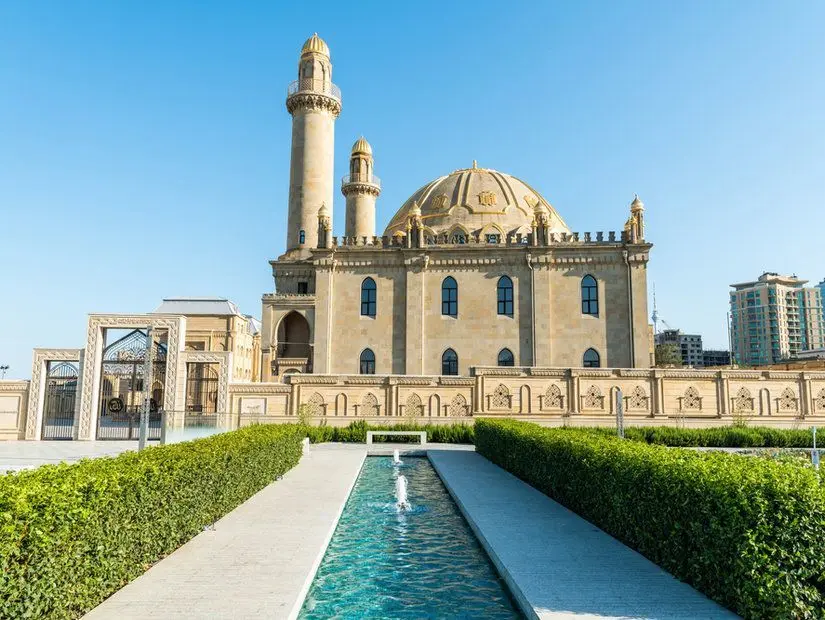
Taza Pir Mosque, one of the most magnificent places of worship in Baku, adds an aesthetic elegance to the city's skyline with its golden domes and white marble architecture. Built in the early 20th century and bearing the signature of architect Ziver bey Ahmedbeyov, this mosque is not only a religious structure but also a symbol of Azerbaijan's architectural and cultural richness. With its interior reflecting the tolerance and peace of Islam, its spacious courtyard and impressive ornaments, it offers a peaceful atmosphere to its visitors. For travelers, Taza Pir Mosque is a rare stop in Baku where they can experience both architectural beauty and spirituality.
Museums and Art Centers to Visit in Baku
Azerbaijan Independence Museum
Located in the heart of Baku, the Azerbaijan Independence Museum is an impressive cultural landmark that bears the traces of the country's struggle for independence. Taking its visitors on a historical journey, the museum displays in detail the Azerbaijani people's search for freedom and their struggle for this cause. The story of independence from past to present is brought to life through the documents, photographs and objects on display. This museum is a must-see stop for those who want to explore the historical and cultural heritage of Azerbaijan in depth during their trip to Baku.
Azerbaijan State Academic Music Theatre
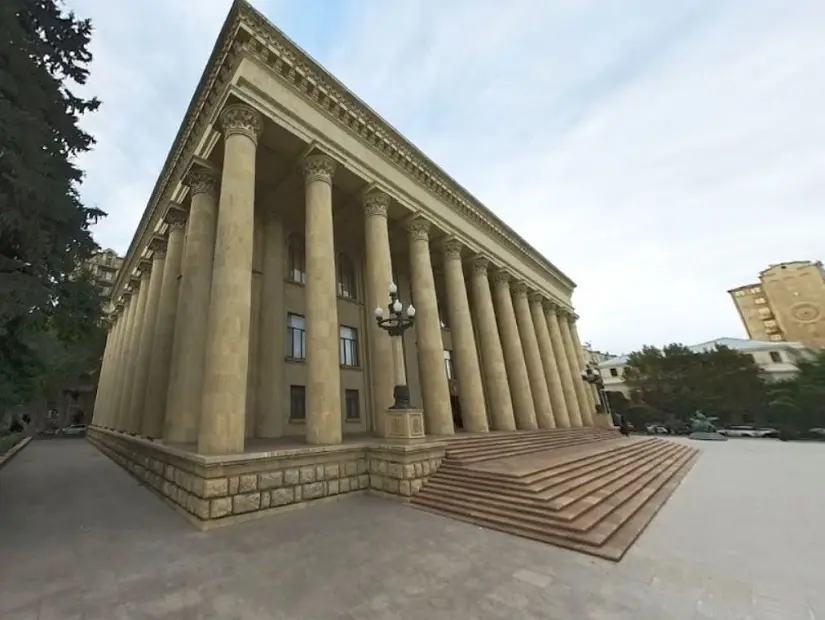
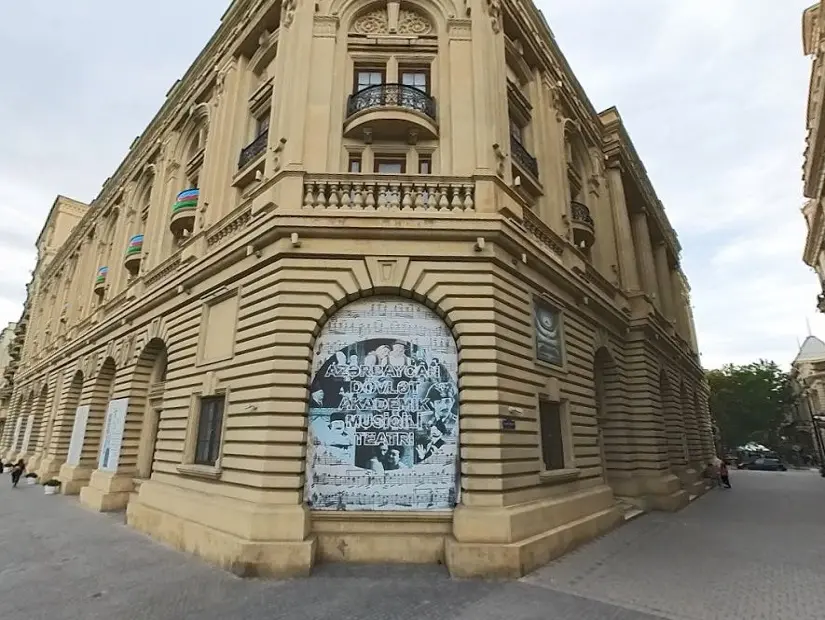
Enriching the cultural fabric of Baku, the Azerbaijan State Academic Music Theatre is a stage that fascinates art lovers with its wide repertoire ranging from musical comedy to classical works. The theatre, whose foundations were laid in 1910 with the staging of the musical comedy "Husband and Wife" written by Uzeyir Hajibeyov, gained official status as an independent institution in 1938. Located on Zarife Aliyeva Street, this historical building reflects a rich cultural diversity with both Azerbaijani and Russian sections.
The theatre combines traditional Azerbaijani music with modern performing arts, providing viewers with unforgettable experiences. During your trip to Baku, don't miss the opportunity to get to know Azerbaijan's musical heritage by watching a show in this unique atmosphere.

Azerbaijan State Philharmonic
Located in the heart of Baku, the Azerbaijan State Philharmonic is one of the city's iconic structures with both its architectural magnificence and cultural richness. Built between 1910 and 1912, this impressive building stands out with its Italian Renaissance-style exterior and German Rococo-style interior decoration. Designed by architect Gabriel Ter-Mikelov, inspired by the Monte Carlo Opera House, the structure initially served as a social club for Baku's elite.
This historical venue, which was converted into a philharmonic in 1936, has become an important cultural center performing Azerbaijan's classical western music and traditional folk music repertoire. The philharmonic named after Muslim Magomayev hosts the country's leading orchestras and artists. With its elegant architecture, impressive acoustics and historical atmosphere, Azerbaijan State Philharmonic offers an unforgettable experience of art and history during your trip to Baku.
Azerbaijan State Puppet Theatre
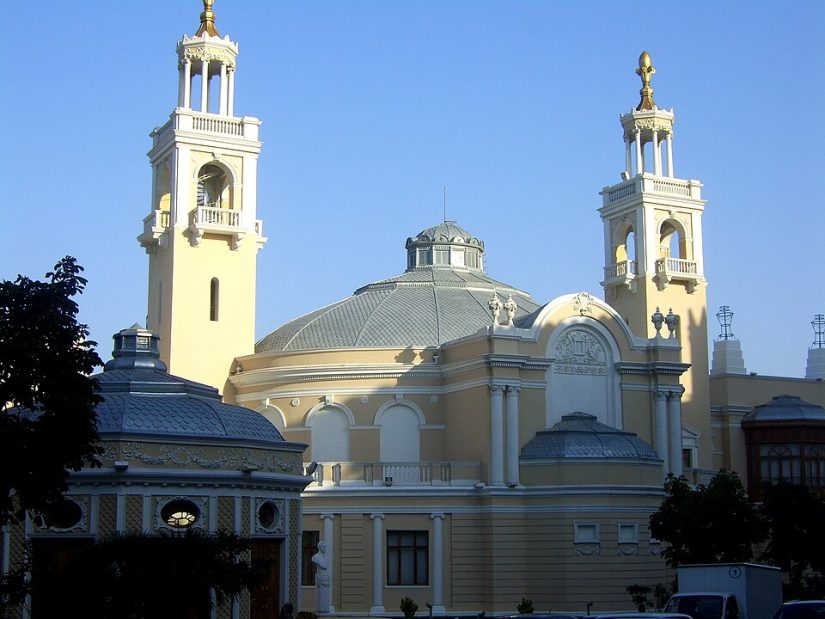
Located on Baku's historic Neftchiler Boulevard, the Azerbaijan State Puppet Theatre is a unique cultural destination that fascinates visitors with both its architecture and the plays it stages. This impressive structure, built in 1910 in the French Renaissance style, was used for different purposes such as cinema, theater and museum over time, and from the 1970s onwards it began to serve as a puppet theater.
Theatre, children While bringing Azerbaijan's fairy tales and folk stories to the stage with its rich repertoire for children and adults, it has also assumed the role of the country's cultural ambassador in international festivals. During your trip to Baku, don't miss the opportunity to experience this magical atmosphere and discover the subtleties of traditional puppetry.
Azerbaijan State Song Theatre
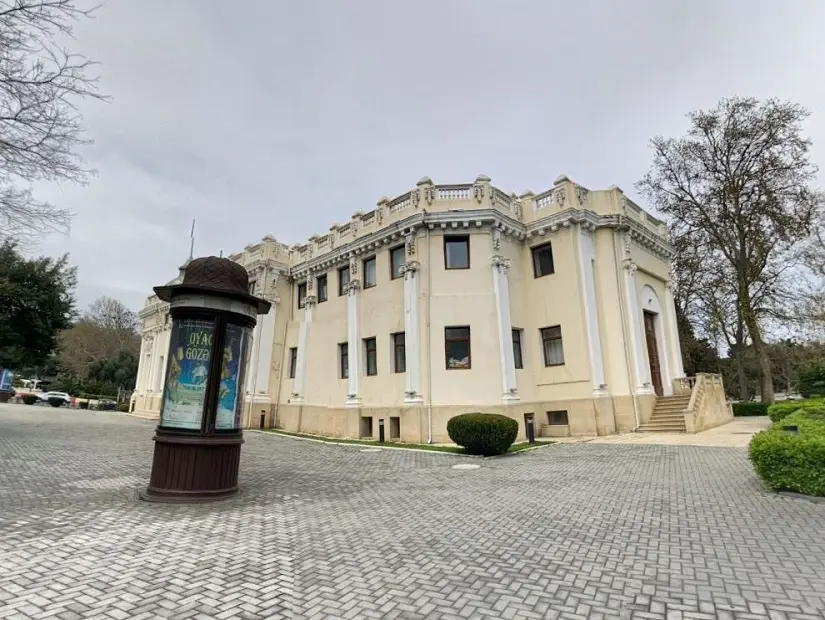
Located in the heart of Baku, the Azerbaijan State Song Theatre is a unique cultural venue that brings the country's rich musical heritage to the stage. Founded in 1968 by the famous artist Rashid Behbudov, this theatre blends traditional Azerbaijani music with modern performing arts, offering unforgettable experiences to the audience. The theater building was built as a synagogue in 1901 and is notable for its Greek Revival architectural style. This structure, which has become a cultural symbol over time, today hosts performances enriched with contemporary interpretations as well as traditional melodies such as folk music, mugam and tesnif. During your trip to Baku, don't miss the opportunity to feel the spirit of Azerbaijan in this special place where music and history are intertwined.
Azerbaijan Literature Museum
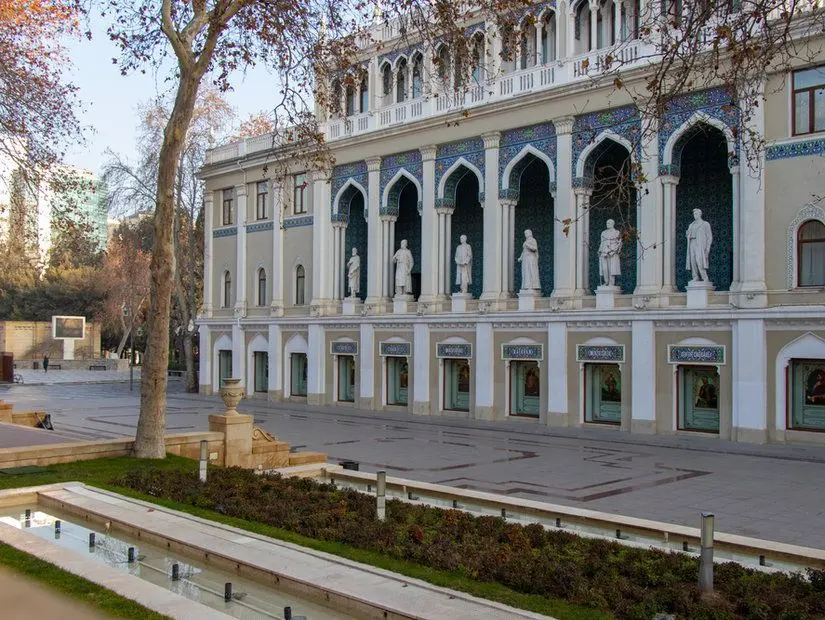
Located in the historical center of Baku, adjacent to Icherishehir, the Museum of Azerbaijani Literature is an important cultural institution that preserves and promotes the country's literary heritage.Named after the great 12th-century poet Nizami Ganjavi, this museum was founded in 1939 and opened to visitors in 1945.The impressive facade of the museum is decorated with statues of important figures of Azerbaijani literature. Inside, there are more than 30 manuscripts, rare books, portraits and memorabilia exhibited in 10 main and 3 additional halls.
The Museum of Azerbaijani Literature is a center that reflects not only literary works but also the cultural and historical richness of the country. During your trip to Baku, you can take an in-depth journey into the literary world of Azerbaijan by visiting this museum.
Azerbaijan Carpet Museum
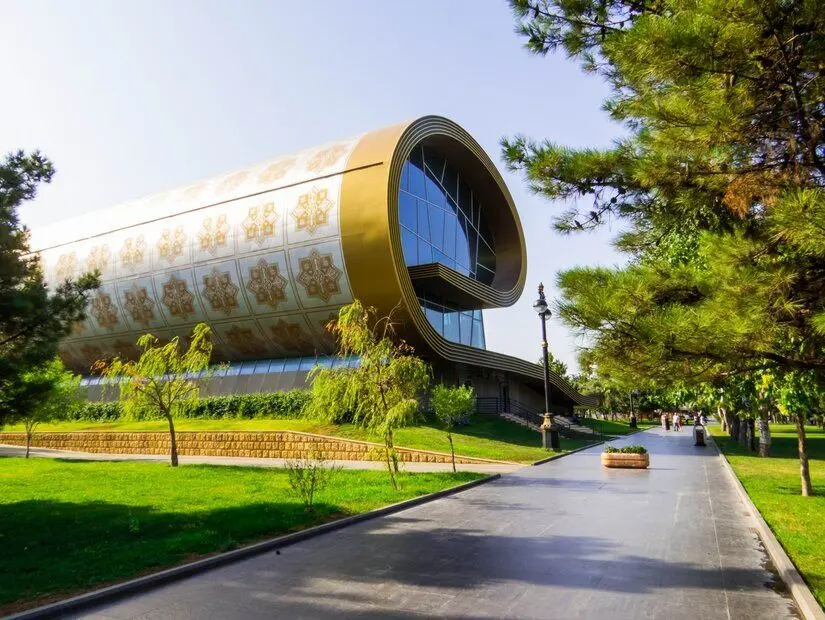
Located on the Caspian coast of Baku, the Azerbaijan Carpet Museum, which draws attention with its unique architecture in the form of a rolled carpet, is a unique cultural center that preserves and exhibits the country's rich carpet weaving tradition. Founded in 1967 and moved to its modern building in 2014, the museum is the world's first carpet museum. Visitors have the opportunity to explore carpets from different regions, such as Karabakh, Guba, Shirvan, Ganja and Tabriz, from the 14th to the 20th centuries, chronologically and regionally. Additionally, ethnographic artefacts such as ceramics, metalwork, traditional clothing and jewellery are also part of the collection. This museum is a must-see stop during your trip to Baku for those who want to get to know the cultural heritage of Azerbaijan and see the intricacies of traditional art.
Azerbaijan Geology Museum
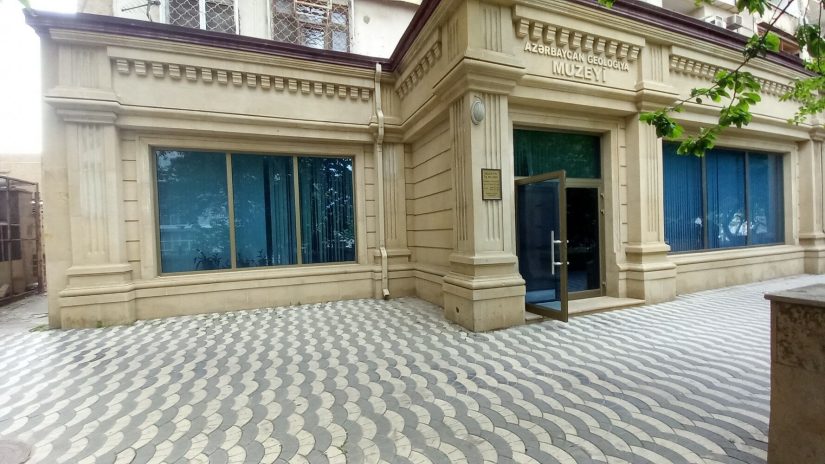
One of Baku’s scientific treasures waiting to be discovered, the Azerbaijan Geology Museum is a unique stop for travelers curious about the country’s rich underground resources and geological structure. The museum, which includes hundreds of minerals, rocks, fossils and paleontological samples in its extensive collection, offers visitors a natural journey back millions of years. The exhibition halls, enriched with modern presentation techniques, combine both education and a passion for discovery, impressing visitors of all ages. For those who want to discover the silent history of nature and see Azerbaijan’s geological diversity up close, this museum is one of the scientific and inspiring stops of their Baku trip.
Azerbaijan National Museum of Fine Arts
One of Baku’s cultural treasures, the Azerbaijan National Museum of Fine Arts is one of the city’s most impressive stops for art enthusiasts. Founded in 1936 and dazzling with its baroque architecture, this museum houses works by Azerbaijani artists as well as rich collections of Western European, Russian and Eastern art. With exhibition areas ranging from French rococo furniture to miniature paintings, sculptures to textile arts, it offers visitors an artistic journey through time. Located in the heart of the city, this prestigious museum is not just an exhibition hall; it is an unmissable experience for travelers who want to discover Baku’s artistic spirit and aesthetic vision.

Azerbaijan National Costume Museum
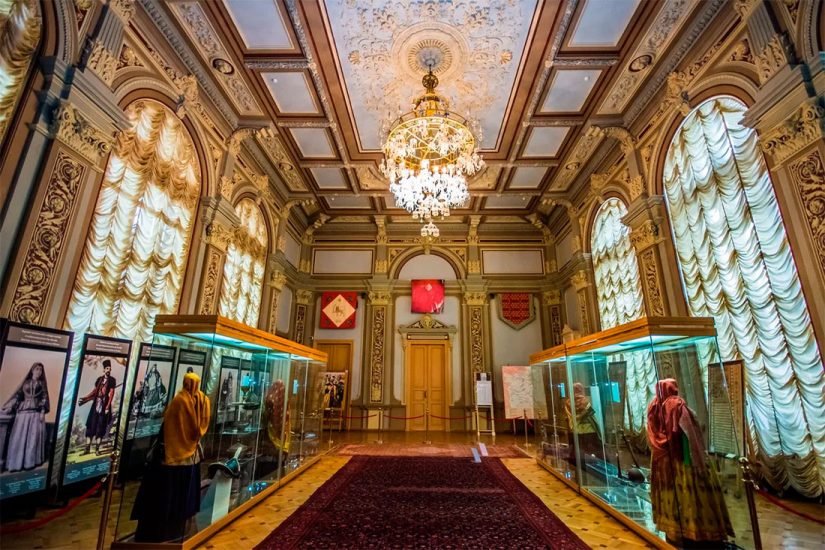
One of the important stops reflecting the cultural richness of Baku, the Azerbaijan National Costume Museum offers visitors the opportunity to discover the country's traditional clothing culture. The museum displays traditional clothing from different regions of Azerbaijan, taking visitors on a fashion journey from past to present.
The clothes on display are of great importance not only from an aesthetic point of view but also from a social and cultural perspective. Each piece of clothing reflects the lifestyle, social status and regional characteristics of the period it belongs to, revealing the rich cultural heritage of the Azerbaijani people.
During your trip to Baku, you can visit this museum and get to know the colorful and diverse clothing culture of Azerbaijan, and embark on a cultural journey with this special collection that bears traces of the past.
Azerbaijan National History Museum
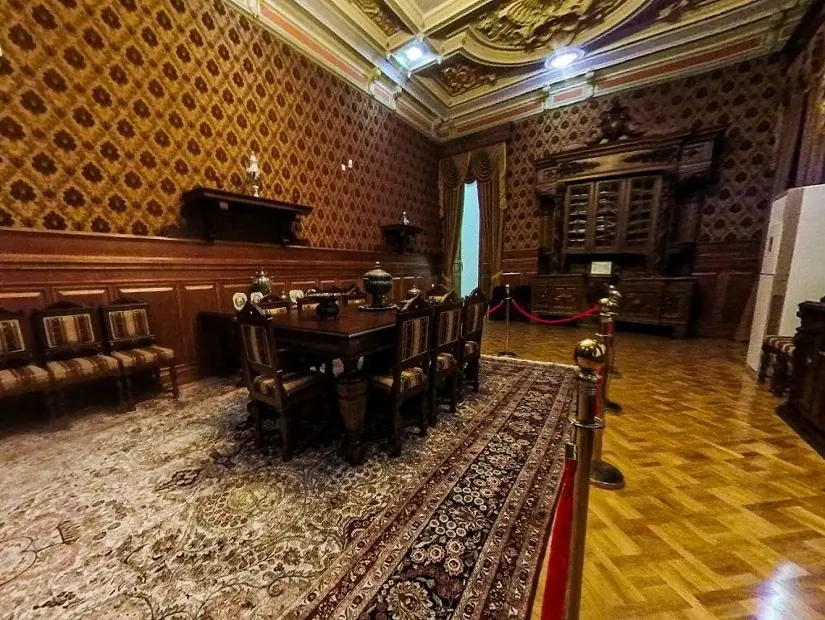
Rising with magnificent architecture in the heart of Baku, the Azerbaijan National History Museum is a unique cultural treasure that sheds light on the country's rich past.Built in the late 19th century, this magnificent structure is the former residence of Azerbaijani philanthropist Haji Zeynalabdin Taghiyev and reflects the elegant details of the Italian Renaissance style.
This venue, which was converted into a museum in 1920, invites its visitors to a comprehensive journey through time from prehistoric times to the modern age. The museum's collection includes more than 300.000 valuable items, including archaeological finds, ethnographic artifacts, rare manuscripts, ancient coins, and traditional clothing. In addition, Taghiyev's living spaces are preserved in their original form, providing visitors with the opportunity to closely observe the lifestyle and aesthetics of the period.
For those who want to explore the historical and cultural richness of Azerbaijan in depth during their trip to Baku, the Azerbaijan National History Museum is a must-see stop.
Baku Crystal Hall
Located on the Caspian Sea coast of Baku, right next to Flag Square, Baku Crystal Hall is an impressive structure reflecting the modern face of the city. Built in 2012 to host the Eurovision Song Contest, this multi-purpose arena hosts many major events from concerts to sports competitions, with a capacity of 27.000 people.
Drawing attention with its crystalline architecture and exterior equipped with LED lights, the hall offers a fascinating visual feast in the evening hours. This venue, which has hosted concerts by world stars such as Jennifer Lopez, Shakira, and Rihanna, has also hosted various sports events such as boxing, taekwondo, and esports.
During your trip to Baku, you can experience the cultural and sporting energy of the city up close by visiting the Baku Crystal Hall, which stands out with its modern architecture and dynamic atmosphere.

Baku Miniature Book Museum
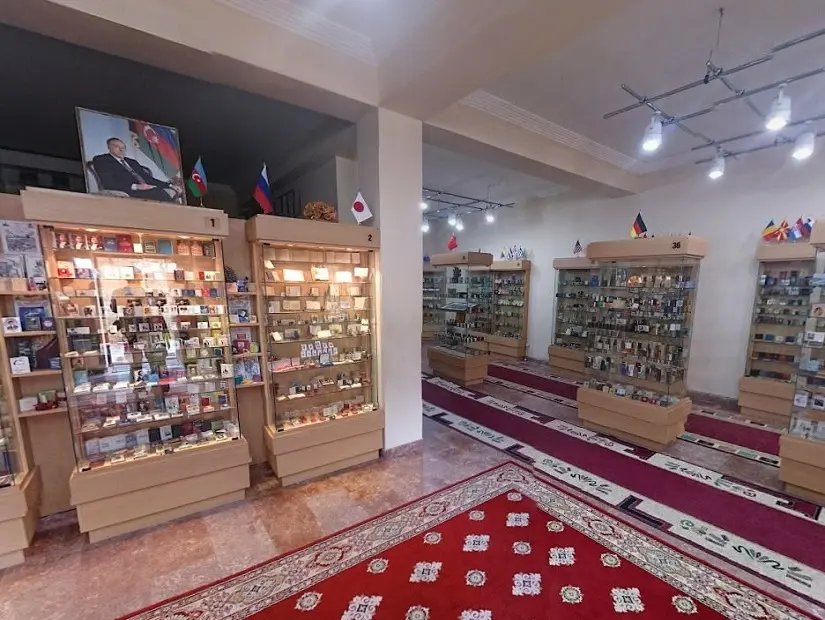
Located in the historical Inner City district of Baku, the Miniature Book Museum is a unique cultural treasure that houses the world's smallest books. Opened in 2002, this private museum has a collection of more than 7,5 miniature books measuring less than 9.000 cm. Visitors can see many rare works, from a 17th-century manuscript of the Holy Quran to a 0,75×0,75 millimeter book called “Flowers of the Four Seasons” printed in Japan. Additionally, important works of Turkish literature such as Atatürk's "Nutuk" and Nazım Hikmet's poetry books are also exhibited in the museum. This museum, which has free admission, is a must-visit stop in Baku for literature and culture enthusiasts.
Baku Museum of Modern Art
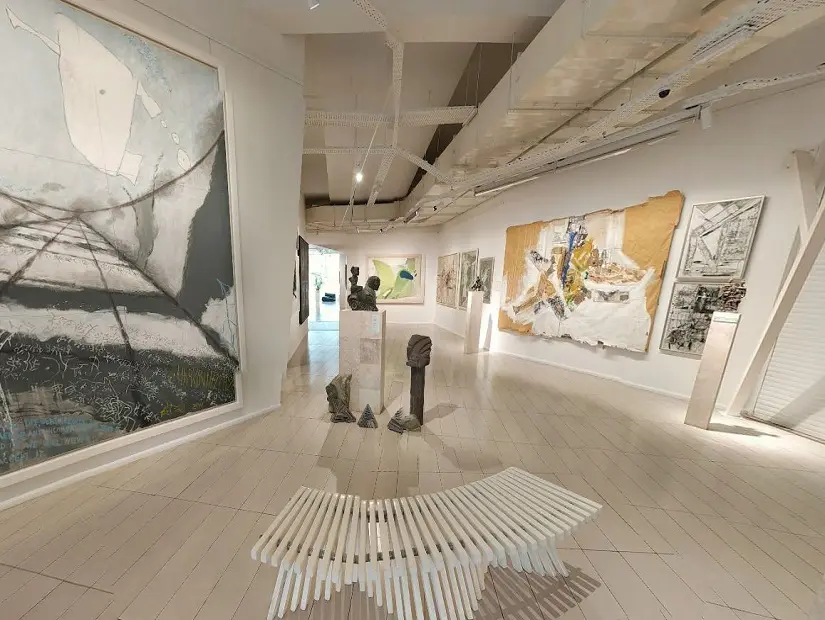
Standing out in Baku's dynamic cultural scene, the Baku Museum of Modern Art invites visitors to an impressive discovery with works that push the boundaries of contemporary art. Opened in 2009, this unique museum hosts works by Azerbaijani avant-garde artists as well as world-renowned names such as Salvador Dalí, Pablo Picasso and Marc Chagall. The cornerless and fluid architecture of the space reflects the free spirit of art and offers visitors an experience beyond the classical museum concept. This creative atmosphere, where painting, sculpture, installation and video art are intertwined, is an unmissable opportunity for those looking for an inspiring stop surrounded by art during their Baku trip.
Baku International Mugam Center
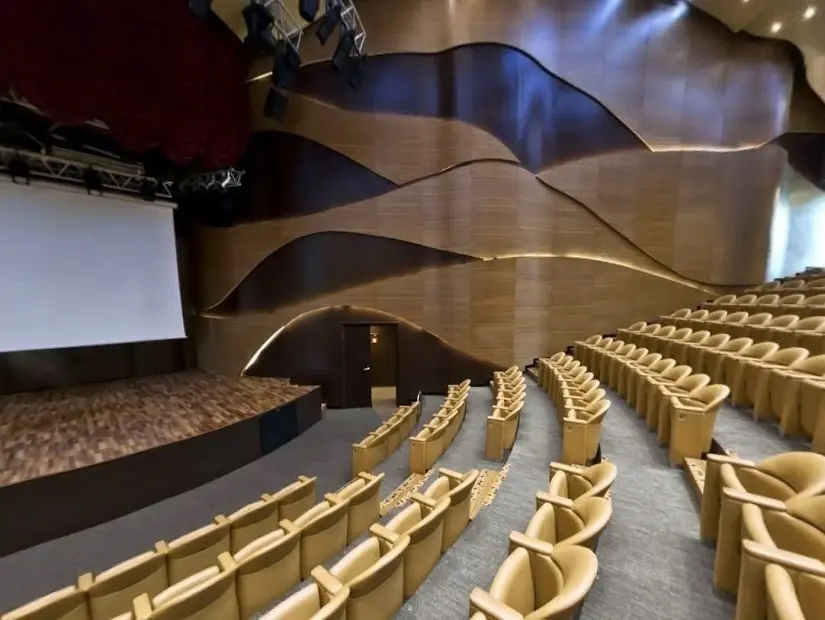
Rising with its eye-catching architecture on the modern coastline of Baku, the International Mugam Center is a unique cultural center dedicated to the art of mugam, Azerbaijan’s deep-rooted musical tradition. Bringing traditional music to life with a contemporary approach, this structure draws attention with both its acoustic features and its elegant design inspired by the instrument form. With its concert halls, exhibition areas and educational units, it stands out not only as a performance venue but also as a cultural meeting point. For travelers, this is a special stop where they can feel the soulful melodies of Azerbaijan in their souls and experience unforgettable moments surrounded by art.
Baku Stone History Museum
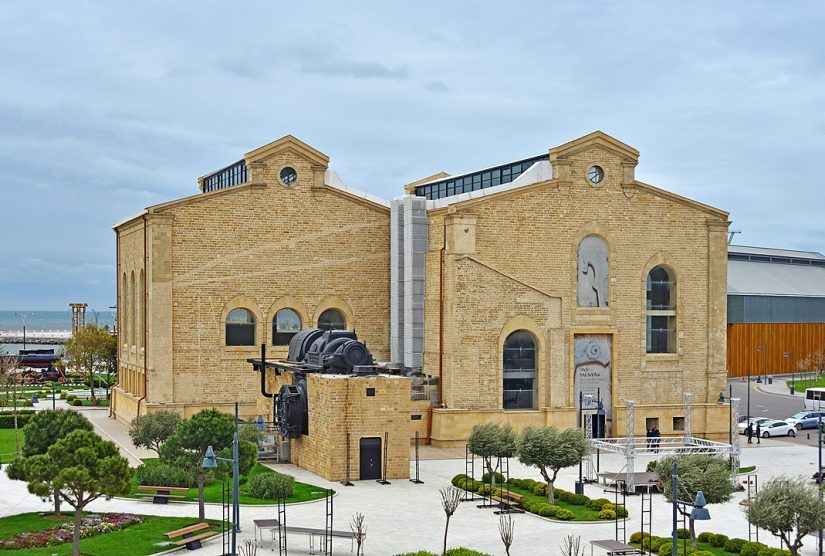
Located in Baku's Flag Square, the Stone History Museum (Daş Salnamə Muzeyi) is an impressive cultural landmark that showcases the centuries-long evolution of Azerbaijan's stonemasonry and sculpture. Founded in 2015 by the Heydar Aliyev Foundation, the museum was founded by restoring an old power plant built in 1901.
The museum collection displays stone artifacts such as rock carvings, tombstones and epigraphic inscriptions brought from regions such as Gobustan and Qala. Especially the cist-shaped tombstones from the Middle Ages provide important clues about the social, cultural and ideological life of the period.
Baku Stone History Museum is a unique place that offers both history enthusiasts and art lovers the opportunity to discover a rich past told through the language of stones.
Heydar Aliyev Cultural Center
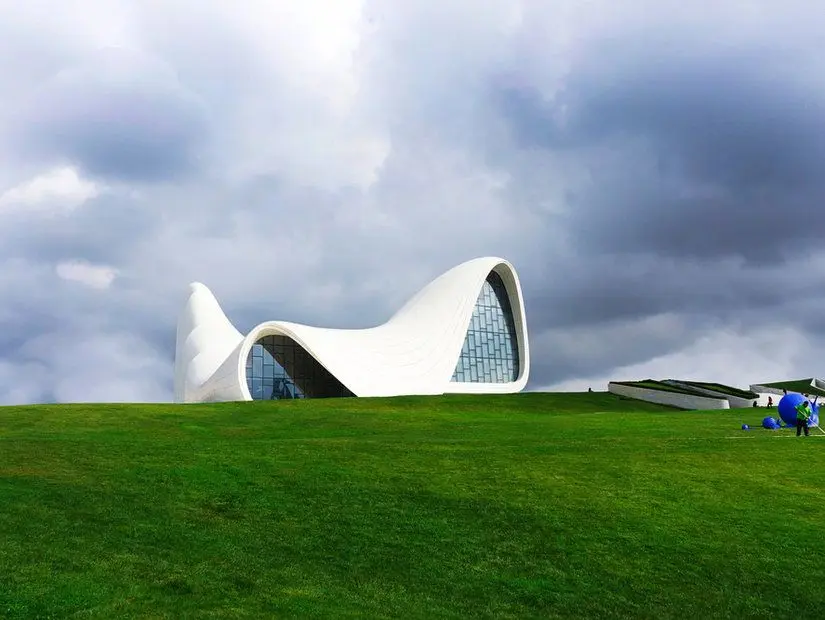
Making an elegant mark on the skyline of Baku, the Heydar Aliyev Cultural Center is not only an architectural structure but also a symbol of Azerbaijan's contemporary vision. This impressive structure, designed by world-famous architect Zaha Hadid, draws attention with its fluid and wavy form, far from sharp lines. The center, which opened its doors in 2012, offers many cultural venues such as concert halls, exhibition areas, museums and libraries in an area of 101.000 square meters. Promising its visitors both an aesthetic visual feast and a rich cultural experience, Heydar Aliyev Cultural Center is a candidate to be one of the unforgettable stops of your Baku trip.
Parks and Natural Areas to Visit in Baku
Absheron National Park
Located in the Shah Dili region of the Absheron Peninsula, approximately 60 kilometers southeast of Baku, Absheron National Park is a unique discovery spot for nature and wildlife enthusiasts. Established in 2005 and spreading over an area of 783 hectares, this park is one of the rare areas where semi-desert and coastal ecosystems meet.
Absheron National Park is ideal for activities such as nature walks, bird watching and photography. Hiking trails along the coast offer visitors unique views of the Caspian Sea. In addition, the park's dune areas and small islets are among the beauties waiting to be discovered by nature lovers.
During your trip to Baku, you can visit Absheron National Park and get to know the natural riches of Azerbaijan up close. This park is a destination not to be missed for those who want to experience peaceful moments in touch with nature and those who want to explore wildlife.

Absheron Peninsula
A direct extension of Baku Absheron PeninsulaThe Absheron Peninsula is one of the most remarkable regions of Azerbaijan, both for its historical riches and its unique natural beauty. This peninsula, stretching towards the Caspian Sea, stands out with its hot and arid climate, salt lakes, volcanic landscapes, and natural resources. While it inspires history enthusiasts with traces of settlements dating from ancient times to the present day, it offers unique landscapes to nature lovers with its wind, sun, and wide horizon. If you want to add a cultural depth and a sense of natural discovery to your Baku trip, the Absheron Peninsula is definitely a stop you should explore.
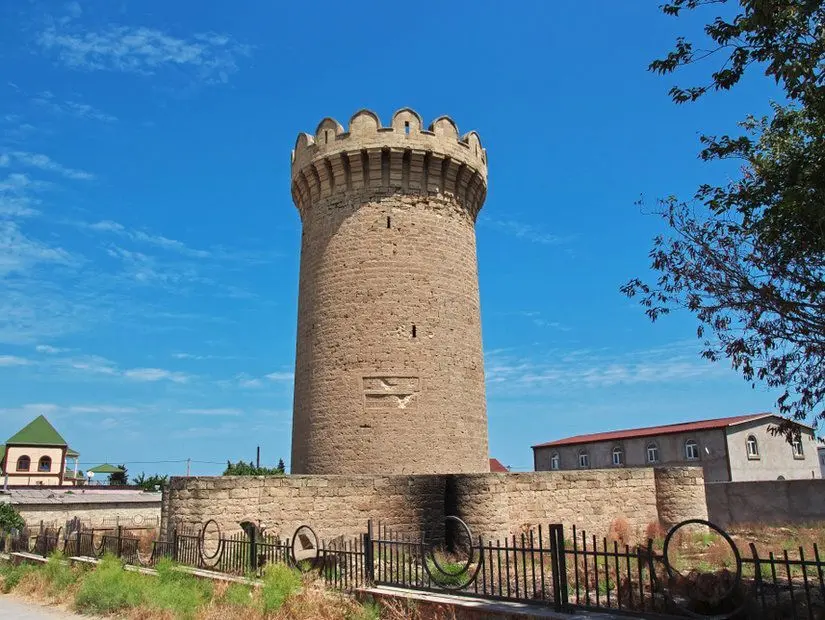
Military Trophies Park
Located in the heart of Baku, the Military Trophies Park is an impressive open-air museum symbolizing Azerbaijan's victory in the 2020 Nagorno-Karabakh War. Opened in 2021, this park covers an area of approximately 5 hectares and displays nearly 150 heavy weapons and armored vehicles and more than 300 pieces of military equipment captured during the war. Visitors have the opportunity to directly observe the traces of war by closely examining tanks, artillery batteries, anti-aircraft missile systems and various military vehicles.
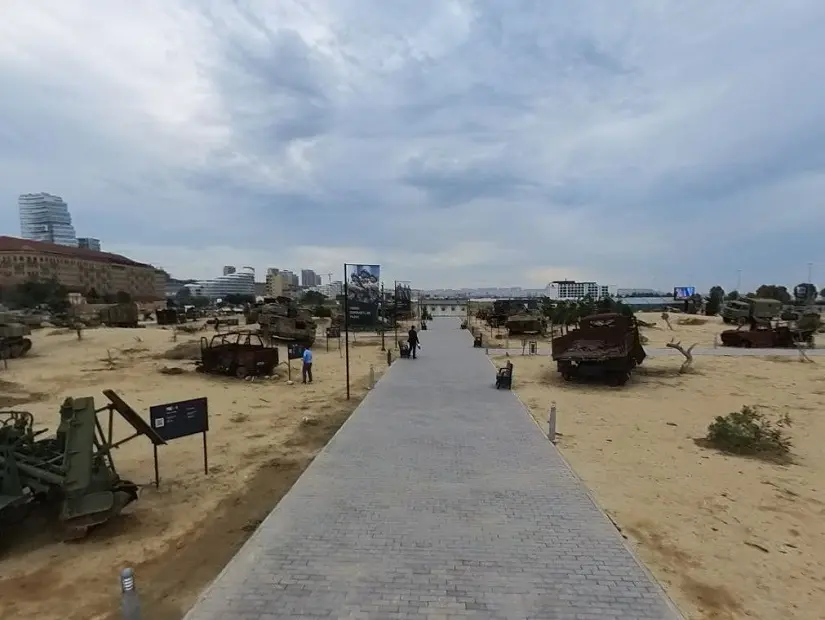
Baku Ataturk Park
Located in the Narimanov district of Baku Ataturk Park, with Azerbaijan Turkey It is a meaningful green area that symbolizes the bonds of friendship and brotherhood between people. Opened in 2019, this park takes its name from Mustafa Kemal Atatürk, the founder of the Republic of Türkiye, and reflects the strong historical and cultural ties between the two countries.
Spread over an area of approximately 6,5 hectares, Ataturk Park offers a peaceful environment to visitors. The park has walking paths, children's playgrounds, sports equipment and relaxation corners. Additionally, the sculptures and art installations in the park offer a visual feast for visitors.
Ataturk Park is more than just a recreation area, it is a symbol of friendship and shared historical awareness between Azerbaijan and Turkey. By visiting this park during your trip to Baku, you can experience peaceful moments in nature and feel the common values of the two brother countries.
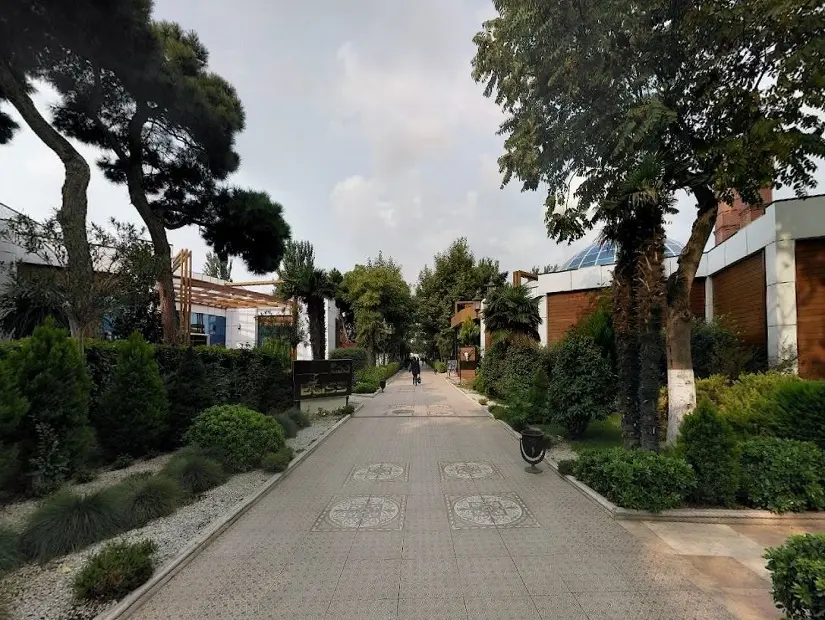
Baku Botanical Garden
For those looking for a break from the bustling atmosphere of Baku and surrounded by nature, Baku Botanical Garden offers a unique escape. Located on Mikayıl Müşfiq Street, a short distance from the city center, this large green area was established in 1934 and serves to protect and promote the flora of Azerbaijan.
The garden, which has recently undergone a comprehensive renovation process, has many new arrangements such as modern greenhouses, walking paths, ponds, children's playgrounds and recreation areas. Here, visitors can observe rare plant species brought from different climate zones and have pleasant moments in the peaceful atmosphere offered by nature.

Baku Philharmonic Garden
Located in the historic Icherishehir district of Baku, the Philharmonic Garden is one of the oldest and most elegant parks in the city. Founded in 1830, this green area has become an important part of Baku's cultural and social life over time. The Azerbaijan State Academic Philharmonic building, rising right next to the garden, dazzles with its architecture and adds an artistic touch to the atmosphere of the park.
The Philharmonic Garden offers visitors a peaceful environment with its colorful flower beds, shade trees and elegant walking paths. The ornamental pool and surrounding benches located in the center of the park are ideal for those who want to relax and get away from the noise of the city. Additionally, open-air concerts and cultural events held in the garden reflect the artistic spirit of Baku.
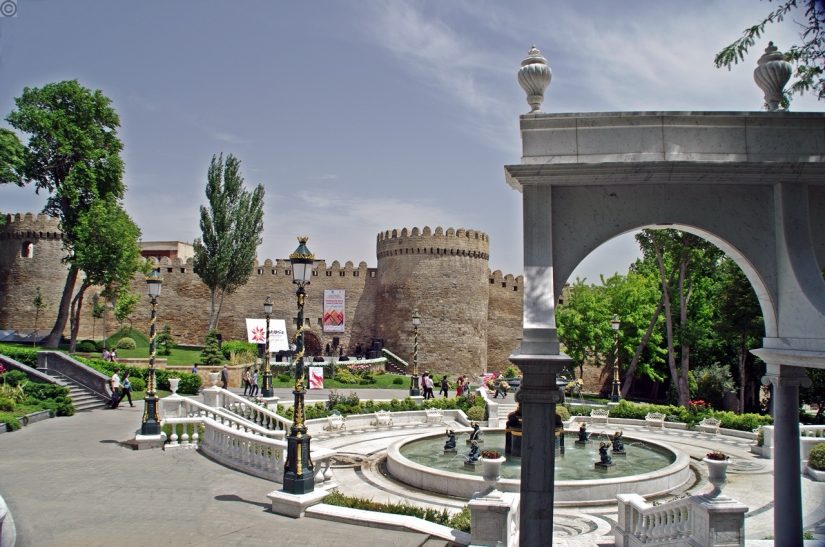
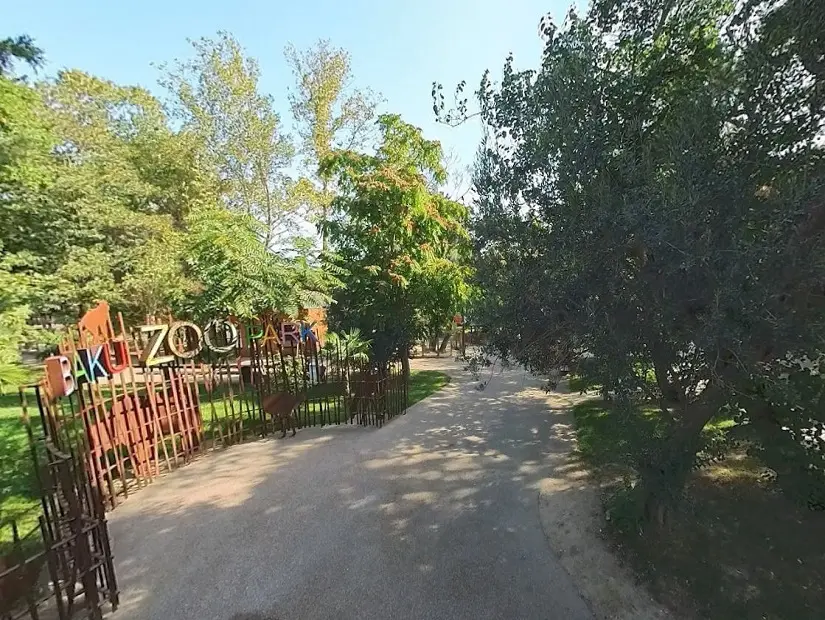
Baku Zoo
Located in the Narimanov district of Baku, Baku Zoo is a delightful stop that brings together the love of nature and animals. Founded in 1928 and officially opened in 1942, this zoo is the oldest and most established zoo in Azerbaijan with an area of 4,25 hectares.
Baku Zoo is home to more than 125 animal species. These species include the Amur tiger, Africa Mammals such as lion, leopard, jaguar, zebra, bison, brown bear, red deer, alpaca, llama, kangaroo, maned sheep, wolf, fox; water birds such as flamingo, pelican, duck, swan; birds of prey such as eagle, vulture, owl; exotic birds such as parrot, pheasant, peacock; reptiles such as snake, crocodile, iguana; and water creatures such as fish and turtles.
Baku Zoo is an ideal place for visitors who want to spend a day in touch with nature and get to know different animal species. It also offers an educational and entertaining experience for children.
Lake Buyuksor
Located in the heart of the Absheron Peninsula in the northwest of Baku, Lake Boyuksor is notable as one of the largest lakes in the city. This lake, which has a surface area of approximately 16,2 km² and a length of 10 km, has been associated with environmental problems for many years.
However, thanks to the comprehensive ecological restoration projects carried out in recent years, Lake Böyükşor and its surroundings have come to life again. Böyükşor Boulevard, created on the eastern shore of the lake, offers a pleasant environment to visitors with its walking paths, bicycle tracks, children's playgrounds and resting points. In addition, the landscaping around the lake and the planting of thousands of trees have increased the natural beauty of the region.
Lake Büyükşor is an ideal destination for both nature lovers and those looking for a short getaway from the city. During your trip to Baku, you can visit this renewed natural area, witness the transformation of the city and have a peaceful day.

Mud Volcanoes
Mud Volcanoes, located near Baku, around the Absheron Peninsula and Qobustan, are one of the most interesting geological formations in Azerbaijan. Home to almost half of the world’s mud volcanoes, this region attracts both science enthusiasts and nature lovers. The mixture of mud, gas and minerals rising from the depths of the earth to the surface offers a visually impressive and geothermal unique natural spectacle. These gray-brown volcanic fields, shaped by silent eruptions, are the scene of dramatic landscapes, especially at sunset. If you want to add a different and exploratory stop to your Baku trip, mud volcanoes offer you a natural miracle from deep within the earth.

Fuzuli Park (Winter Park)
Located in the heart of Baku, on Fuzuli Street, Fuzuli Park (Qış Park) is a special green area that reflects the modern texture of the city and offers its visitors a peaceful break. Opened in 2013, this park, with an area of approximately 7 hectares, is one of the popular spots for both locals and tourists.
The park attracts attention with its wide walking paths, recreational areas and aesthetic landscaping. Additionally, various sculptures and works of art in the park reflect the cultural richness of Azerbaijan. Especially in the evening hours, with the lighting, the park offers an ideal atmosphere for romantic walks and photo shoots.
Fuzuli Park also stands out with its location close to the historical and cultural centers of Baku. After relaxing in the park, visitors can have the opportunity to explore the surrounding museums, galleries and historical buildings. For those who want to spend a moment in touch with nature in the city, Fuzuli Park is a stop not to be missed.
Lake Goygol
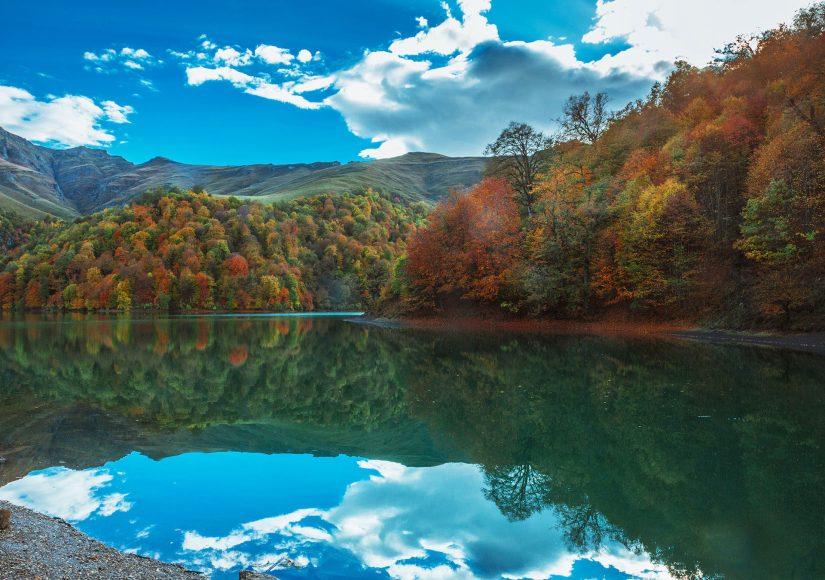
Located approximately 360 kilometers from Baku, close to the city of Ganja, Lake Goygol is one of the most impressive natural beauties of Azerbaijan. This lake, which takes its name from its clear and deep blue waters, was formed after a major earthquake in Kapaz Mountain in 1139. As a result of the earthquake, rock masses that broke off from the mountain blocked the Ağsu Stream and formed this unique natural lake.
Located at an altitude of 1.556 meters above sea level, Göygöl is 2.8 kilometers long, 0.8 kilometers wide and approximately 93 meters deep. Located within the borders of Göygöl National Park, the lake is a paradise for nature lovers with its dense forests surrounding it and rich biological diversity.
Highland Park
Located at one of the highest points in Baku, Highland Park is the vantage point offering the most impressive panoramic view of the city. The blue of the Caspian Sea, the Flame Towers, a symbol of modern architecture, and the historical Icheri Sheher district are just a few parts of the scenery offered by this park.
The Martyrs' Lane in the park commemorates those who lost their lives in Azerbaijan's struggle for independence. This area offers visitors both historical depth and the opportunity to pay tribute.
To reach Highland Park, you can use the funicular line departing from Baku Boulevard or climb the stairs to the top of the park. When you reach the top, you can have a bird's eye view of the city's important symbols, such as the vast waters of the Caspian Sea, the Flame Towers, which attract attention with their modern architecture, and the historical Icherişehir district.

Khagani Garden (Molokan Garden)
Located in the historical Sabail district of Baku, Khagani Garden, also known as Molokan Garden, is an ideal escape for those who want to take a short break from the busy rhythm of the city and offers its visitors a green and peaceful environment. A small but impressive city park with an area of approximately 0.8 hectares, this garden was established in the 19th century in the area where the Russian Molokan community lived. This area, which was known as "Mariinsky Square" over time, was given names such as "January 9 Garden" and "Hashim Aliyev Garden" during the Soviet period, and after independence it took its current name, named after Khagani Shirvani, one of the important poets of the 12th century.
The curved pool in the center of the garden and the "Three Graces" sculpture group, consisting of three elegant female figures, are among the most striking elements of the park. Equipped with ample shade trees, flower beds and walking paths, Khagani Garden offers a tranquil setting for those looking to get away from the noise of the city. Along with the cafes and historical buildings around it, this garden is an ideal stop for those who want to both relax and feel the cultural texture of Baku.

Qobustan National Park
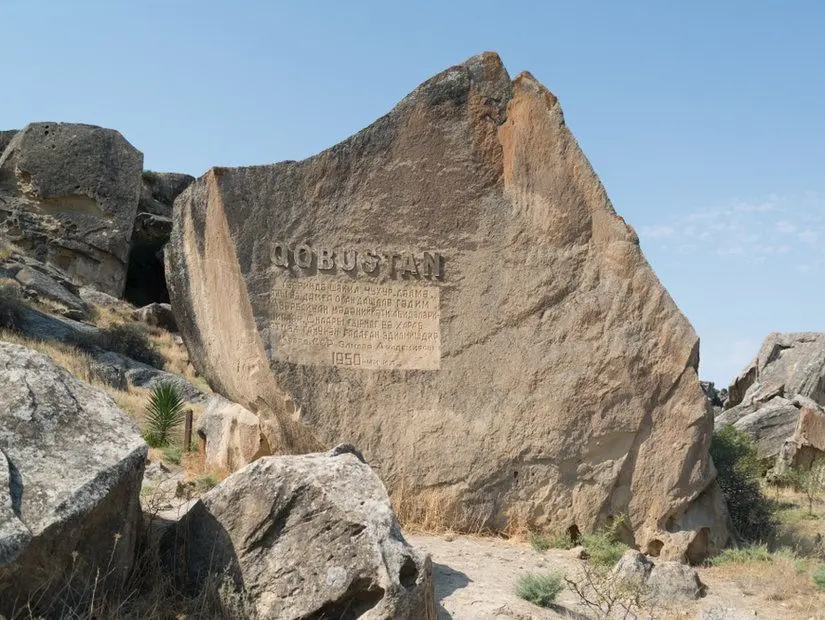
Located approximately 64 kilometers southwest of Baku, Qobustan National Park is a unique discovery spot for history and nature enthusiasts. This park, which is on the UNESCO World Heritage List, spreads over an area of 537 hectares and carries the traces of human history to the present day with more than 6.000 rock carvings.
Petroglyphs in the park, dating from 40.000 BC to 5.000 BC, feature hunting scenes, dance figures, animal depictions and scenes from daily life. Additionally, the natural musical stone called Gaval Daşı located in the region offers a unique experience to visitors by making drum-like sounds when hit.
Little Venice
Located on the coastline of Baku, on Denizkiyisi Boulevard, Küçük Venice (Kiçik Venesiya) offers a miniature European fairy tale on the shores of the Caspian Sea. This unique complex, established in the 1960s, offers its visitors a real Venetian experience with its canals, stone bridges and gondola tours. It is an ideal stop for travelers who want to both relax and enjoy the city with its romantic atmosphere, landscaping and surrounding cafes and restaurants. Gondola tours, especially at sunset, make this special spot, which brings together Baku's modern face and aesthetic architecture, unforgettable. For a short but magical break during your Baku trip, Little Venice is definitely worth a visit.

Masazir Lake
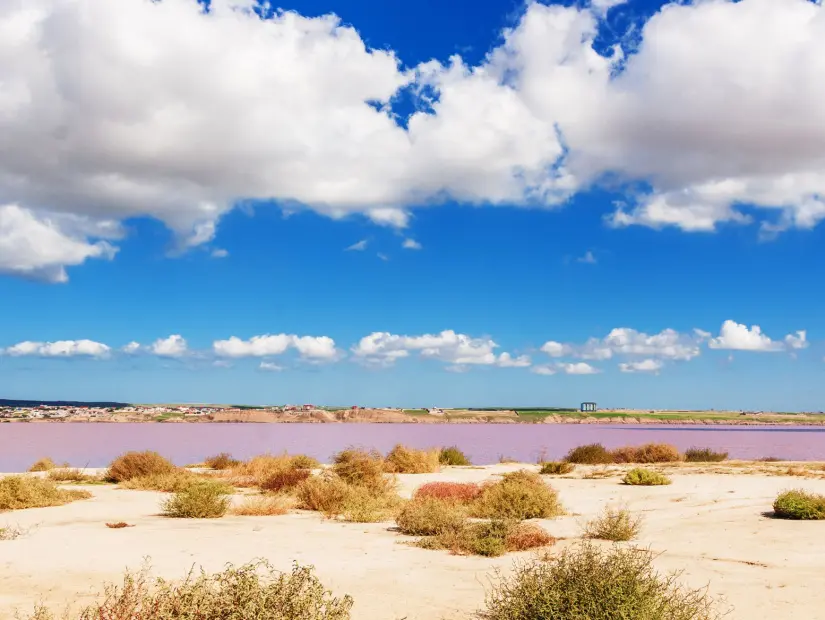
Located on the Absheron Peninsula, about 30 kilometers northwest of Baku, Lake Masazır is a unique destination for nature lovers and photography enthusiasts. This lake, which turns pink at certain times of the year due to its high salt content, stands out among the natural beauties of Azerbaijan.
Covering an area of approximately 10 km², Lake Masazır also attracts attention with its rich salt reserves. A modern salt processing facility was established in the lake, where salt has been produced since 1813, in 2010. This facility processes the salt obtained from the lake and produces two local salt brands of Azerbaijan.
The pink tones of Lake Masazır offer impressive views, especially at sunrise and sunset. This unique natural coloration is created by the interaction of the salt water and certain microorganisms found in the lake. Visitors can walk around the lake, take photos and experience this visual feast offered by nature.
Shikh Beach
Located southwest of Baku, about 10 kilometers from the city center, Shikh Beach offers a popular summer escape for those looking to encounter the cool waters of the Caspian Sea. Known for its golden sands and calm atmosphere, this beach is a popular spot for both locals and tourists.
Shikh Beach offers its visitors not only sea pleasure but also various facilities. Cafes and restaurants near the beach provide the opportunity to taste delicious meals accompanied by sea views. There are also various activities available for those interested in water sports.
Shikh Beach is also very accessible in terms of transportation, and can be easily reached by buses or taxis departing from the city center. An ideal destination for those who want to cool off and enjoy the sun during the summer months, Shikh Beach is one of the places you must visit during your trip to Baku.

Upland Park (Martyrs' Lane)
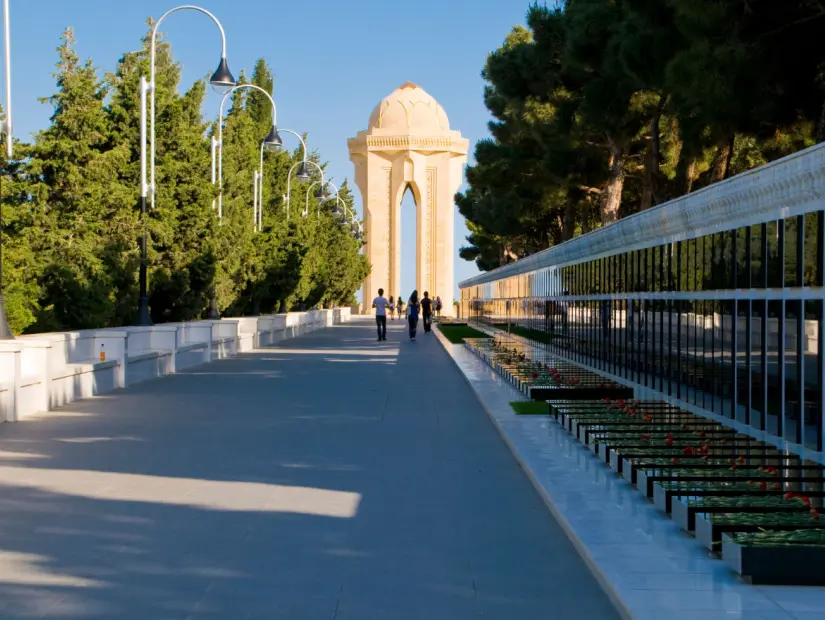
Upland Park (Martyrs' Lane), one of the highest points in Baku, is a place that fascinates visitors with both its historical importance and the magnificent views it offers. This park was created to commemorate the martyrs who lost their lives in Azerbaijan's struggle for independence, and is also an ideal spot for those who want to watch the panoramic view of the city.
The Eternal Flame Monument, located at the entrance to the park, symbolizes the memory of those who sacrificed their lives for the independence of Azerbaijan. The graves around this monument belong to Azerbaijani and Turkish soldiers who lost their lives in the 1918 Baku Battle and the 1990 Black January events. This area instills a deep sense of awe and sadness in visitors.
Yanar Mountain
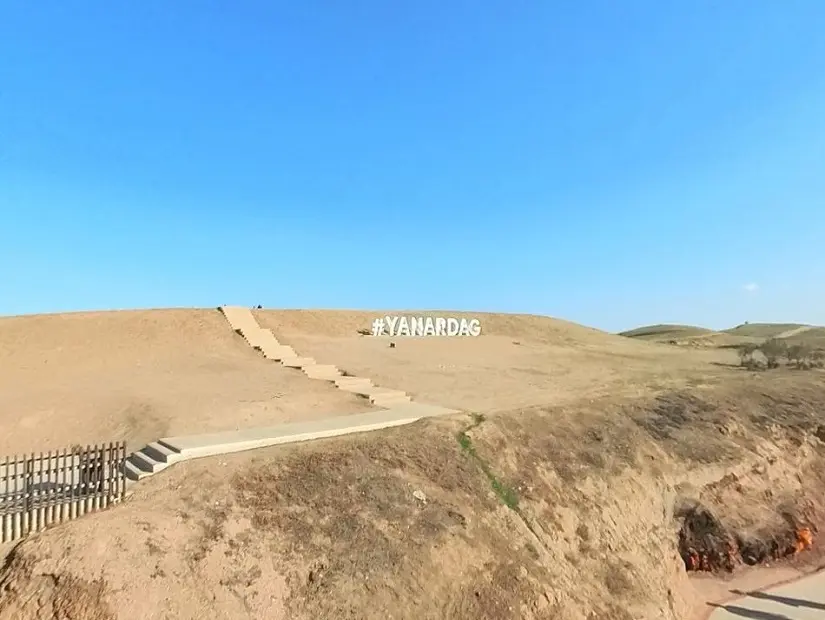
Yanar Dag, located on the Absheron Peninsula in the north of Baku, offers one of the most interesting miracles of nature with its flames that have been burning continuously for centuries. This wall of flames, formed by the spontaneous ignition of natural gas leaking from underground, continues to burn day and night. This unique natural phenomenon, which is “burning mountain” as its name suggests, offers its visitors both a visual feast and a mysterious atmosphere. In Azerbaijan, where the cult of fire has played an important role throughout history, Yanar Dag is both a mystical symbol and an opportunity to witness the power of nature. Be sure to visit this natural fire scene during your trip to Baku; because here, the fire coming from the soil carries the spirit of the past to the present.
Baku is a unique city that offers a perfect harmony of modern architecture with its historical texture. It appeals to every visitor with its places to visit, from the Old City surrounded by ancient walls to its towers resembling flames, from cultural museums to beaches and parks surrounded by nature. If you are planning to discover this fascinating capital, you should definitely visit the natural wonders and cultural heritages in the surrounding area, not just Baku. To take a look at all the beauties of Azerbaijan Places to Visit in Azerbaijan For comprehensive information and route suggestions about Baku, please contact our guide. Baku Travel Guide Be sure to check out our article. Remember, Baku is not just a city, it is an experience where the past and the future are lived simultaneously.
PREVIOUS TOPIC

Similar Threads


Write a Comment
Visitor Comments - 0 Comments