Kuala Lumpur Travel Guide 2026: Where to Stay, What to Eat, What to See?
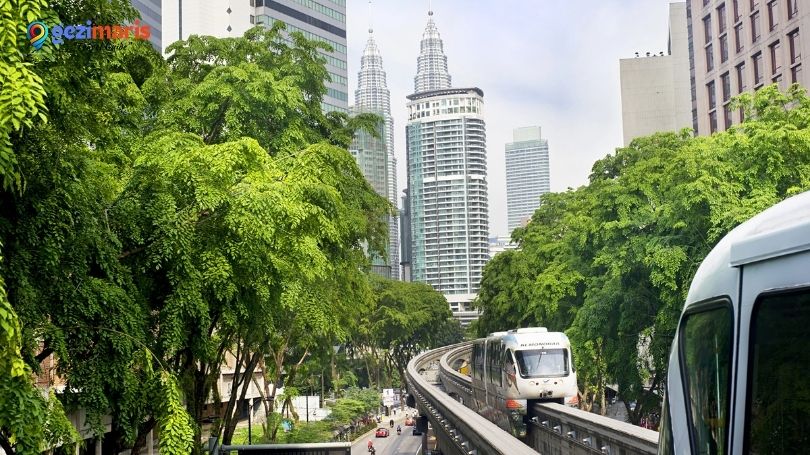
To Kuala Lumpur IstanbulThe first thing I notice when I go there is this: the city is big, humid, and multi-layered, but if you stay in the right area, it's easier to navigate than you think. For a first-time visitor, 2 full days is a good start; if you allocate 3 days, you can include the Petronas-KLCC area, the Chinatown-Merdeka Square line, and Batu Caves in your itinerary without rushing. For my first stay in Kuala Lumpur, I find Bukit Bintang, KLCC, or the Chinatown/Pasar Seni triangle to be the most practical areas. In this guide, I describe Kuala Lumpur from the perspective of a traveler departing from Istanbul, covering transportation, accommodation, places to visit, food, shopping, nightlife, and price examples for 2026.
Quick and Practical Information About Kuala Lumpur
| Topic | Practical information |
|---|---|
| How many days is enough? | 2 days of the main route, 3 days of more relaxed travel. |
| Where should we stay the first time? | Bukit Bintang, KLCC, Chinatown/Pasar Seni |
| The best period | It's a year-round destination; May-September may be drier, so be prepared for short tropical showers. High humidity and abundant rainfall are the general climate characteristics in Malaysia; it was predicted that the southwest monsoon would bring drier days from May to September in 2026. |
| Currency | Malezya Ringgit, RM/MYR |
| TL account | I round 1 RM to approximately 11,5 TL on my daily account; the exchange rate should be checked again before traveling. |
| Card or cash? | Cards are convenient in shopping malls, hotels, and chain restaurants; cash is better suited for small stalls and markets. |
| Urban transportation | A combination of MRT, LRT, monorail, Grab, and short walks. |
| Average daily budget | Economy 180-300 RM; mid-range 350-650 RM; casual touring 750 RM+ |
| Security | Generally relaxed in tourist areas; important things to do are bringing your bag, phone, and choosing a taxi/Grab late at night. |
| Log out | English is more than enough in tourist areas. |
| Power outlet/internet | British-type G socket; eSIM or the local SIM works |
When is the best time to visit Kuala Lumpur?
Kuala Lumpur is a tropical city; here, "perfectly dry" Europe It's important not to get your hopes up about "summer." A sunny morning can turn into a short but intense downpour in the afternoon. That's why I divide my schedule into two parts: the morning outdoors, the afternoon museum/shopping mall/cafe, and the evening back to the streets.
For first-time visitors, the most comfortable period is generally between May and September. In 2026, the Malaysian Meteorological Department announced that the southwest monsoon would begin on May 14th and last until September, with fewer rainy days expected during this period. Nevertheless, packing a light raincoat, a small umbrella, and a quick-drying t-shirt is practical, not a luxury, in Kuala Lumpur.
How to get to Kuala Lumpur?
The most comfortable option from Istanbul to Kuala Lumpur is to look for a direct flight. As of July 2026, current sample round-trip economy tickets on Turkish Airlines' Istanbul-Kuala Lumpur route started from around 33.800 TL; this figure changes rapidly depending on the period, campaigns, and transfer situations. For connecting flights, Doha, Dubai, Abu DhabiJeddah or Bangkok It's possible to get a better price through other channels, but the total time is significantly longer.
The two most important preparations for Turkish citizens are: ensuring the passport is valid for at least 6 months from the date of entry into Malaysia, and completing the Malaysia Digital Arrival Card (MDAC) form before arrival. According to the official system, the MDAC form must be submitted within 3 days prior to arrival.
The cleanest option from the airport to the city center is the KLIA Express. The journey from KLIA to KL Sentral takes 28 minutes; a one-way adult ticket costs 55 RM, and a return ticket costs 100 RM. The train runs every 20 minutes during the day; this would be my preferred method for a first trip with luggage.
Those looking for a more economical option can consider the bus + Grab combination. Late at night, if you're two or more people, Grab can sometimes be a more sensible option, especially if your hotel is far from KL Sentral and transferring luggage can be tiring.
Kuala Lumpur City Transportation
Trying to explore Kuala Lumpur entirely on foot would be a mistake. Even if you enjoy walking from Taksim to Karaköy in Istanbul, the humidity in KL is on another level. The most sensible option is to take the MRT/LRT/monorail to the main stations and walk the last 1-2 kilometers, or use a Grab bus.
The Rapid KL network includes LRT, MRT, monorail, BRT, Rapid KL buses, and MRT feeder bus lines. A one-day unlimited travel pass for tourists costs around 25 RM, and a three-day option is around 50 RM; it quickly pays for itself if you plan to use the rail system a few times within the city. Single-ride city train fares are generally low; it's possible to find them in the 1-5 RM range for short distances.
My practical rule is this:
Rail in the morning and afternoon, Grab when it gets hot, short walks after dinner.
How many days does it take to visit Kuala Lumpur?
- 1 days: KLCC, Petronas area, Pavilion/Bukit Bintang, Jalan Alor and night lights.
- 2 days: In addition to the first day, we'll also visit Chinatown, Central Market, Merdeka Square, Masjid Jamek, and KL Tower.
- 3 days: Batu Caves, Kampung Baru, Islamic Arts Museum, or National Museum are added.
- 4 days or more: Day trips to Putrajaya, Genting Highlands, Malacca, or Kuala Selangor, like the fireflies, are included in the program.
I think flying long distances from Istanbul and only staying one night is unfair to Kuala Lumpur. At least two nights, ideally three, is enough to truly experience the city.
Where to stay in Kuala Lumpur?
When choosing a hotel in Kuala Lumpur, the neighborhood is more important than the star rating. Two hotels of the same quality could mean one is right in the middle of a walkable route while the other constantly forces you to use the Grab.
| Area | Who is it suitable for? | Plus | Attention | Price level |
|---|---|---|---|---|
| Bukit Bintang | First-time visitors, those who want food and nightlife | Pavilion, Jalan Alor, monorail, shopping | It's crowded and touristy in the evening. | Medium-comfortable |
| KLCC | Comfort, view, families | Petronas, park, shopping mall, feeling safe. | More expensive | Mid-luxury |
| Chinatown / Pasar Seni | Budget traveler, cultural route | Central Market, Petaling Street, MRT/LRT | Some streets are quieter at night. | Middle economy |
| KL Sentral / Brickfields | Transfer, short stay | Airport train and transport links. | The city atmosphere is more functional. | Middle economy |
| Kampung Baru | For those who want local food and views of the Petronas Mountains | Dinner, photos | Accommodation options are limited. | Medium |
In 2026, it wouldn't be surprising to see hostel/guesthouse rates in central Kuala Lumpur ranging from RM 25-80, clean budget hotels from RM 80-180, mid-range hotels from RM 250-500, and comfortable hotels with good views around KLCC exceeding RM 600 per night. Accommodation prices fluctuate rapidly during weekends, trade fairs, and public holidays.
Places to visit in Kuala Lumpur
Petronas Twin Towers and KLCC Park
This is the postcard-perfect view of Kuala Lumpur. Even just seeing the Petronas Towers from below is impressive, but if your budget allows, you can add the Skybridge and Observation Deck experience to your itinerary. It's a good idea to consider a foreign adult ticket around RM 98 in 2026; premium access is more expensive.
I like to see the Petronas area twice, once during the day and once at night. During the day you catch the architecture, at night you catch the lights. The walkways and water shows in KLCC Park are especially good for a break in the evening.
- Average time: 1,5-3 hours
- Nearby locations: Suria KLCC, KLCC Park, Aquaria KLCC
- Best time: Before sunset and in the evening
KL Tower / Menara Kuala Lumpur
If you want to get the Petronas Towers in the frame, KL Tower offers a better view. KL Tower reopened in 2026 with a new operating period and changes to ticket options; the Observation Deck is more affordable, while the Sky Deck and glass box experiences are considered more expensive options.
If I had to choose just one tower, I'd select KL Tower for photographic reasons, but Petronas for its symbolic experience.
Batu caves
Going to Batu Caves early in the morning is essential. It can get hot and crowded around midday, making it challenging. The 272 colorful steps, the Murugan statue, and the cave temple atmosphere make it one of Kuala Lumpur's strongest half-day routes. Batu Caves can be reached by KTM Komuter; after the main entrance, you need to climb the stairs.
Practical note: Since it's a temple area, clothing that covers the shoulders and knees is more comfortable. It's also a good idea not to show food to the monkeys.
Chinatown, Petaling Street and Central Market
I consider Chinatown one of the most enjoyable areas to explore on foot in Kuala Lumpur. Petaling Street is more touristy; Central Market, on the other hand, is more organized, selling souvenirs, batik, magnets, bags, printed fabrics, and small design items. The air conditioning in Central Market is also a lifesaver in the afternoon heat.
Merdeka Square, Sultan Abdul Samad Building and Masjid Jamek
This area represents Kuala Lumpur's colonial architecture and its memory of independence. Merdeka Square, the Sultan Abdul Samad Building, and Masjid Jamek are all close together. The photos are better in the early morning; the midday light becomes harsher.
Islamic Arts Museum Malaysia and National Museum
A museum break is a good idea to escape the heat and get a better understanding of the city. The National Museum can be visited for a very reasonable fee of RM 5 for foreign adults; tickets are cash only and can be purchased at the ticket office. The museum is open daily from 09:00 to 17:00, with the last entry at 16:30. The Islamic Arts Museum, with its high-quality collection, is one of the best cultural destinations in the city.
Kampung Baru
Kampung Baru is like a local food route with views of the Petronas Mountains. It's a great stop in the evening for nasi lemak, satay, ikan bakar, and teh tarik. I find it more appropriate to wander the streets here rather than expecting a single touristy spot.
1, 2 and 3-Day Travel Itineraries for Kuala Lumpur
1-Day Kuala Lumpur Itinerary
- Morning: Petronas Twin Towers, KLCC Park, Suria KLCC
- Noon: Eating at Bukit Bintang or Lot 10 Hutong
- Afternoon: KL Tower or Pavilion surroundings
- Evening: Photo of Jalan Alor, Changkat Bukit Bintang, Petronas at night
This route is the most practical plan for first-time visitors who want to "quickly get to know KL".
2-Day Kuala Lumpur Itinerary
- Day 1: Petronas, KLCC Park, KL Tower, Bukit Bintang, Jalan Alor
- Day 2: Chinatown, Petaling Street, Central Market, Merdeka Square, Masjid Jamek, Kampung Baru dinner
The pace of the second day is more local and more walking-oriented. I don't rush this day; it's very well-balanced with a coffee break at Central Market, photos in Chinatown, and dinner at Kampung Baru.
3-Day Kuala Lumpur Itinerary
- Day 1: KLCC and Bukit Bintang
- Day 2: Chinatown, Merdeka, museums
- Day 3: Batu Caves in the morning, National Museum or Islamic Arts Museum in the afternoon, Kampung Baru in the evening.
If you have 3 days, definitely book Batu Caves for a separate morning. Trying to see too many towers, museums, and caves in one day can quickly make you feel unwell due to Kuala Lumpur's humidity.
What to eat in Kuala Lumpur?
The best thing about Kuala Lumpur is that food isn't just about "restaurants," it's part of daily life. Malay, ChinaIndian and Peranakan influences blend together in the same city.
- Nasi lemak: Hindi Stan It comes with walnut rice, sambal, pistachios, anchovies, eggs, and often ayam goreng. It's eaten both in the morning and at night.
- Satay: The skewers come with peanut sauce, cucumber, and ketupat.
- Roti canai: Thin, layered dough; eaten with dhal or curry. Great for breakfast.
- Char kway teow: Noodles cooked quickly in a wok have a strong smoky flavor.
- Laksa: It has a sour, spicy, and thick soup/noodle character.
- Nasi kandar: Rice topped with various curries and meat/chicken options.
- Teh tarik: Frothy milk tea. In KL, it's a bit like a tea break is in Istanbul.
In 2026, a good meal at the street food and kopitiam (a type of Turkish street food) side can often be solved in the 8-18 RM range; 25-45 RM is more realistic in more touristy malls and modern cafes. Reuters' 2026 Kuala Lumpur notes give an example of 3 RM for local coffee or teh tarik; in my budget calculations, I feel comfortable considering drinks in the 3-8 RM range, simple meals in the 8-15 RM range, and fuller plates in the 18-35 RM range.
What to buy in Kuala Lumpur?
The most sensible things to buy from Kuala Lumpur aren't expensive souvenirs, but lightweight and characterful pieces.
- Batik products: Shawls, shirts, bags, small textile products.
- White coffee / local coffee: They can be purchased in packages from supermarkets.
- Spices and sauces: Sambal, curry blends, laksa paste.
- Snack: Durian-flavored products, pandan cakes, local biscuits.
- Tin products: More exclusive gifts in the Royal Selangor style.
Central Market is good for regular shopping. Bargaining and quality control are more important on Petaling Street. Malls like Pavilion, Suria KLCC, and TRX are suitable for those who want to mix local design with international brands.
What to do in Kuala Lumpur?
One of the best things to do in Kuala Lumpur is to read the city not just as a place to visit, but neighborhood by neighborhood.
- Photograph the Petronas at night.
- Go to Batu Caves early in the morning.
- Explore the side streets in Chinatown.
- Have dinner at Kampung Baru.
- Take a walk in KLCC Park after sunset.
- When the tropical downpour begins, take a break at the shopping mall or museum.
- If you have an extra day, allocate half a day to Putrajaya.
Kuala Lumpur Nightlife
Kuala Lumpur's nightlife isn't as vibrant as Bangkok's; it's more focused on rooftop bars, cocktail bars, live music, night markets, and food. For first-timers, the areas around Bukit Bintang and Changkat are the easiest. Rooftop bars with views of KLCC are more upscale and expensive. Kampung Baru, on the other hand, is a good option for a food-focused evening without drinks.
I'd rather use Grab on the way back than walk alone late at night. The main streets of Bukit Bintang are lively, but in the side streets, you just need to be careful with your phone and bag, like you would in Istanbul.
Kuala Lumpur Festivals and Events
Kuala Lumpur's calendar is multicultural: the city takes on a different atmosphere during Chinese New Year, Thaipusam, Hari Raya, Deepavali, Merdeka Day, and Malaysia Day. Batu Caves are particularly busy during Thaipusam; in 2026, Tourism Malaysia specifically highlighted the Thaipusam-Batu Caves period for its Visit Malaysia 2026 visibility campaign.
Hotel prices and traffic can increase during festival periods. If your aim is to experience the atmosphere, these periods are great; if you want a peaceful trip, it's more convenient to avoid major holiday weeks.
Kuala Lumpur Holidays and Closures
Religious and national holidays in Malaysia can affect travel plans. 2026 public holiday Hari Raya, Malaysia Day, and other national holidays stand out on the calendar; if a holiday falls on a weekend, it is observed on the following business day.
It's important to be aware of holiday closures at museums and government institutions. For example, the National Museum may be closed for the first two days of Eid al-Fitr and the first day of Eid al-Adha.
Kuala Lumpur Travel Budget and Current Prices
When calculating my Kuala Lumpur budget, I first separate three items: accommodation, transportation, and tower/museum entrance fees. The food side is still very flexible for someone coming from Istanbul; you can have roti canai for 10 RM or a rooftop cocktail for 80 RM all in the same day.
| Expense item | Economic | intermediate level | Comfortable/Luxurious | Not |
|---|---|---|---|---|
| Accommodation / night | 80-180 RM | 250-500 RM | 600 RM+ | Hotels near KLCC and with views become more expensive. |
| Street food / meal | 8-15 RM | 18-35 RM | 45 RM+ | Jalan Alor and the shopping mall are higher. |
| Local coffee / teh tarik | 3-8 RM | 8-15 RM | 18 RM+ | Kopitiam is the most affordable option. |
| KLIA Express | 55 RM one way | 100 RM return | KLIA-KL Central 28 min. | |
| Rapid KL tourist pass | 25 RM / 1 days | 50 RM / 3 days | Makes sense for frequent rides. | |
| Petronas exit | Around 98 RM | Premium is higher | 230 RM+ | Slots may fill up. |
| National Museum | 5 RM | Cash box office, foreign adults | ||
| Grab is a short distance within the city. | 10-25 RM | 25-45 RM | 50 RM+ | It increases during rainy and peak hours. |
My daily budget calculation:
- Budget traveler: 180-300 RM
- Intermediate traveller: 350-650 RM
- Comfortable travel: RM 750 and above
Assuming 1 RM is approximately 11,5 TL, a mid-range economy day trip costing 300 RM comes to around 3.450 TL. Since the exchange rate fluctuates, it's necessary to recalculate the TL equivalent before traveling.
Kuala Lumpur Travel Map
Things to Consider When Traveling to Kuala Lumpur
In Kuala Lumpur, the biggest issue is rhythm rather than safety. Humidity, downpours, and traffic change the plan. Going outdoors in the morning and moving indoors in the afternoon works well.
- Grab is more transparent than a taxi.
- It is necessary to pay attention to dress codes in temples and mosques.
- It's best not to show food to the monkeys in Batu Caves.
- It's more convenient to avoid prolonging your walk through the back streets late at night.
- Carry cash for small stalls.
- Please double-check KLIA Express, Rapid KL, and museum opening hours before your trip.
- Complete the MDAC form through the official channel; be wary of intermediary websites that charge fees.
Kuala Lumpur is both familiar and different for a traveler from Istanbul: bustling, food-focused, with strong shopping, humid streets, and stunning views. For first-time visitors, I recommend allocating 3 days, staying in one of the Bukit Bintang-KLCC-Chinatown triangle, and balancing the itinerary with stops at the towers, street food, Batu Caves, and museums. On a budget, the city is still flexible; it's a destination that can be affordable if you eat in the right places, but quickly become expensive if you choose scenic and comfortable options.